
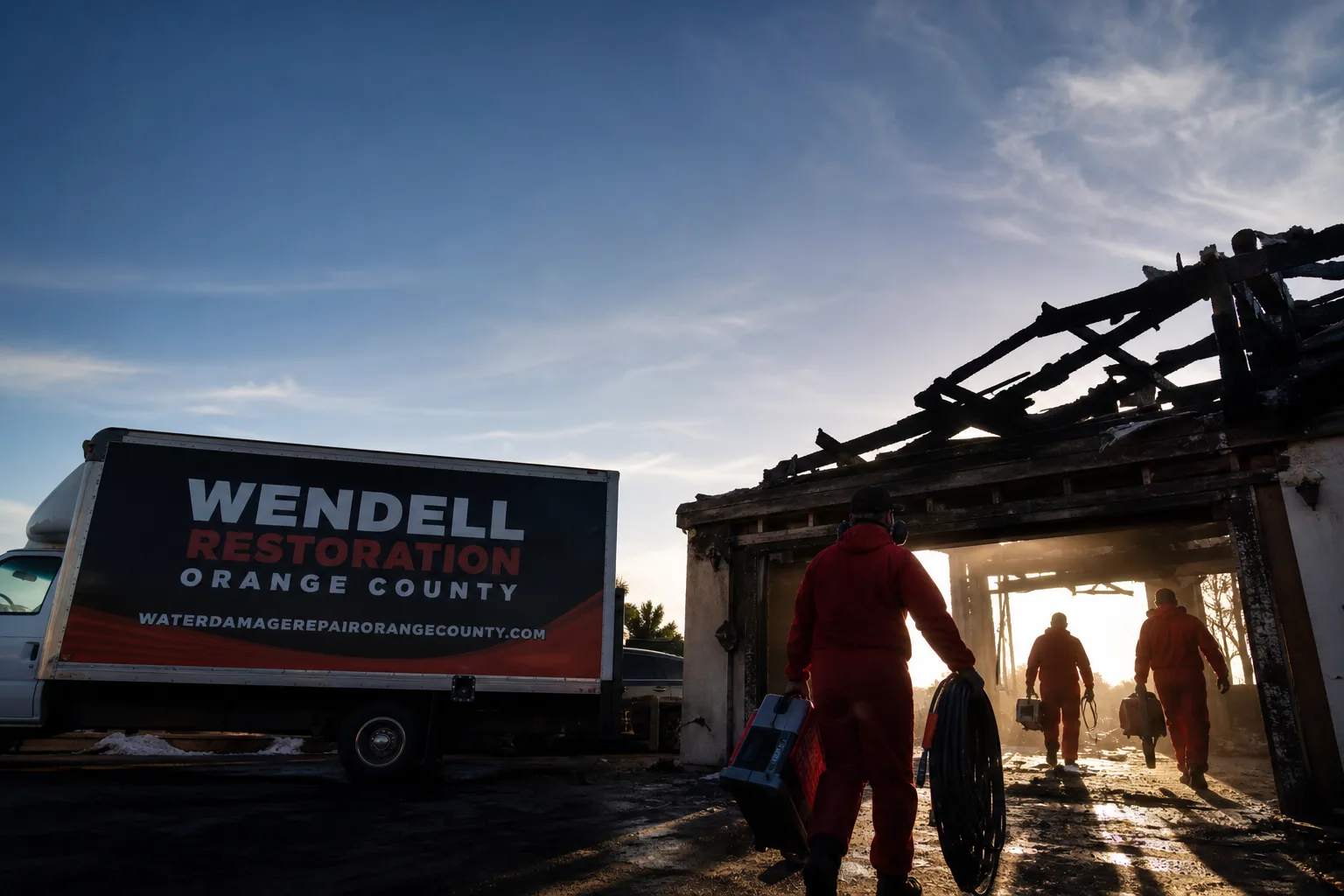
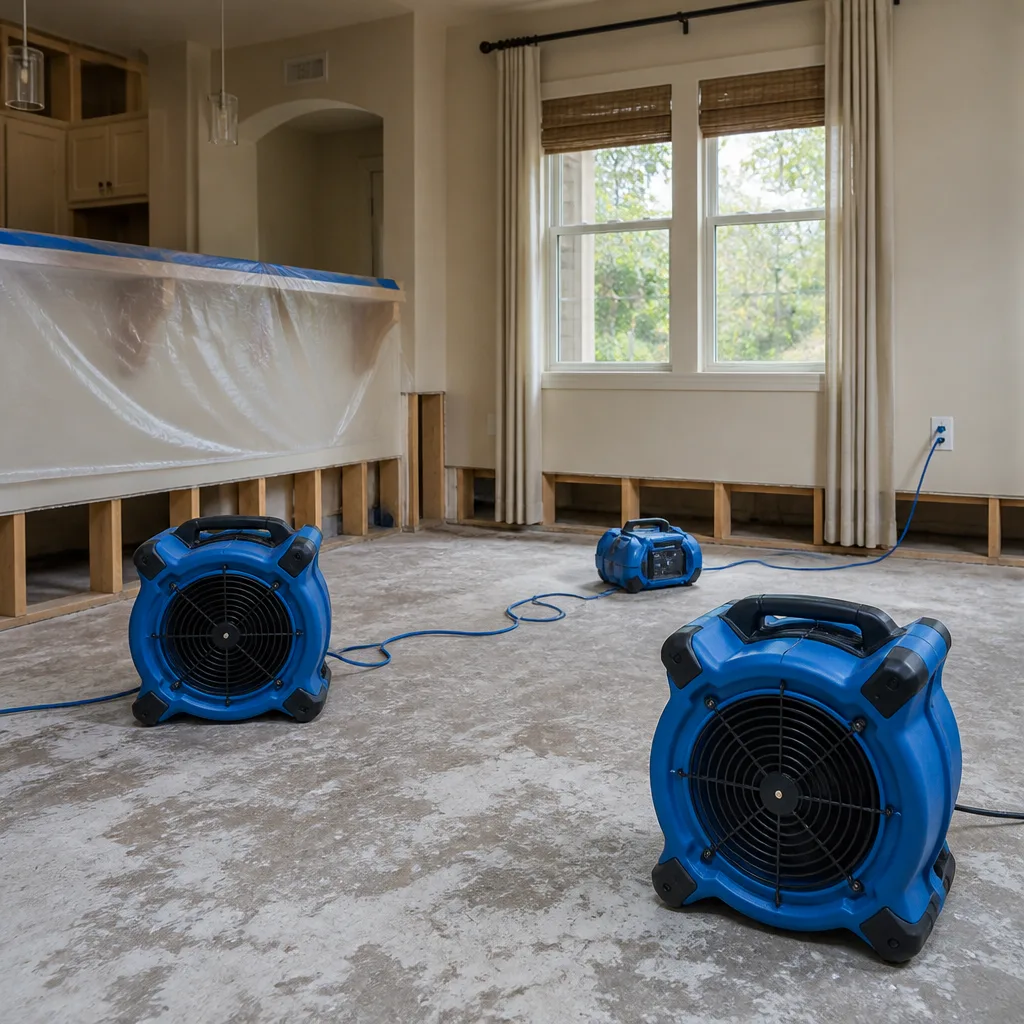
 Water damage drying
 Fire & smoke cleanup
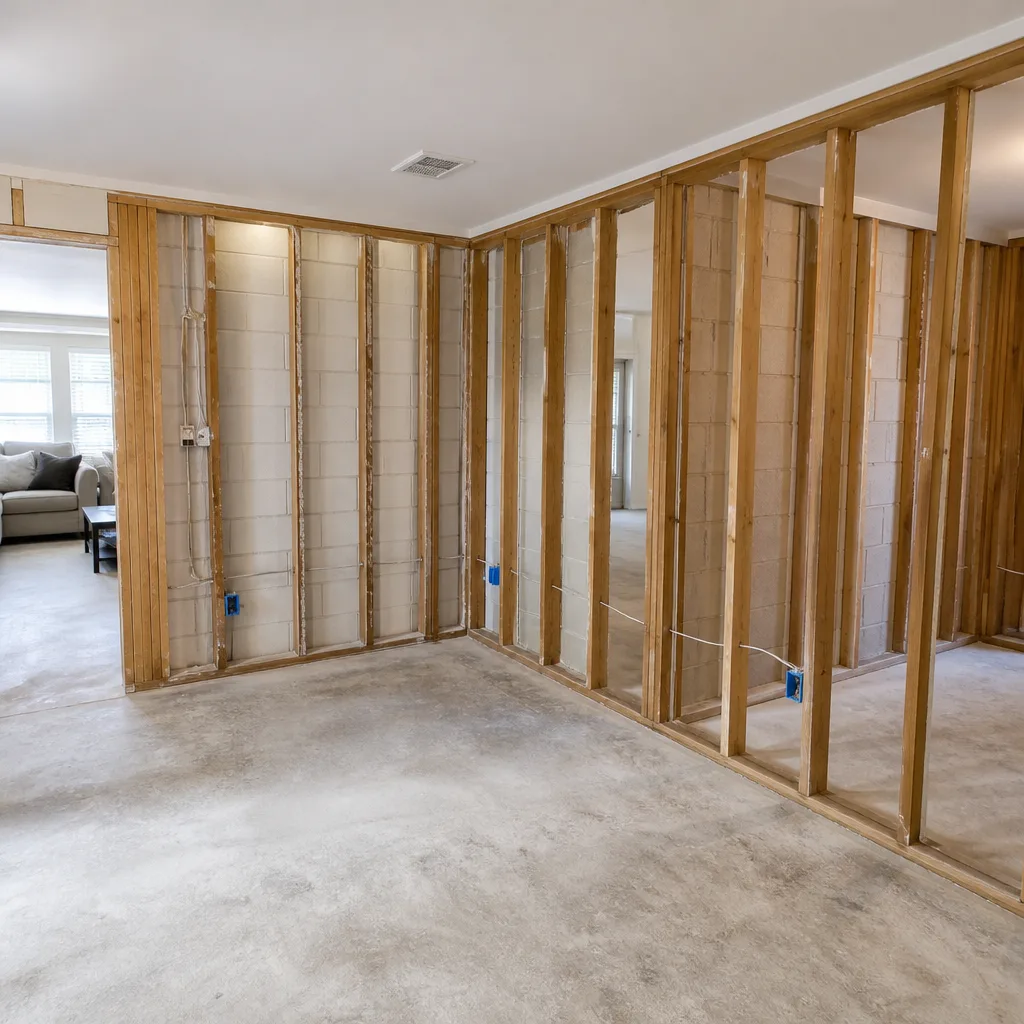 Mold remediation
 Storm response
 Sewage cleanup
 Reconstruction
Free visual inspection and a written scope of work before any mitigation begins - photos, moisture readings, and drying logs go in your claim file
The scope we write is the scope we bill. Anything new gets shown to you, in writing, before we touch it.
Get your free estimateFast, Reliable Water Damage Restoration Across Orange
Water damage restoration in Orange, CA typically costs $2,800 – $7,500 for a standard Category 1 clean-water cleanup with structural drying, and most jobs in central Orange’s older housing stock run on the higher side because original materials need surgical drying, not demolition. Our crews reach most Orange neighborhoods in 45 – 70 minutes from dispatch, so a burst pipe or failed water heater doesn’t sit there soaking into 1920s Douglas fir or 1960s slab-on-grade concrete while you wait on hold. Call (350) 207-2599 and you’ll talk to a live person who can walk you through what to do in the first ten minutes, then give you a written price before any tool leaves the truck.
We know Orange’s houses because we’ve worked in them: Craftsman bungalows off East Maple, Spanish Revivals near the Plaza, mid-century tract homes east of the 55 where radiant floor heating hides leaks for weeks. That local knowledge changes how we dry, what we preserve, and how fast we move.
Why Wendell Restoration Orange County Is Orange’s Preferred Water Damage Restoration Company
Orange homeowners call us because we do something most restoration companies won’t: we put the price in writing before work starts, text you a live arrival time you can track like a rideshare, and send before-and-after photos by text so you see exactly what we did. No vague four-hour windows. No phone tag. No surprise line items at the end.
Every technician who walks through your door in Orange is background-checked, uniformed, and trained to IICRC, RIA, and IFA standards. They bring professional-grade drying equipment from Dri-Eaz, Phoenix, XPOWER, B-Air, and Injectidry, the same brands used on large commercial loss sites. And every repair carries our 365-Day Done Right Promise in writing: if it’s not done right, we make it right, including a free second visit if the repair fails.
We’re part of the Relay Home Co. family, founded in 2006. Each location is independently owned and operated to The Relay Visibility Guarantee: you always know who is coming, when they’ll be there, and exactly what it costs. For this Orange location, calls are answered 24/7 by a live person, and dispatch and scheduling are coordinated from the brand’s Los Angeles office while our crews serve Orange locally. Blake Sorensen leads the Orange County team, and he holds every job in Orange to the same standard we’d want in our own homes.
Restoration work we handle
Flood Damage Restoration in Orange
Flood damage restoration in Orange usually involves supply-line failures, water heater ruptures, or washing machine hose blowouts rather than weather, because the city gets very little rain and sits on relatively flat ground away from any significant floodplain. What Orange does get is aging infrastructure: galvanized pipes in pre-1960 homes and water heaters tucked into tight closet spaces that leak for hours before anyone notices. A typical flood damage restoration job in Orange runs $3,000 – $8,000 depending on how far water traveled through the structure and whether original flooring or plaster is involved.
What Flood Cleanup Actually Involves Here
In a raised-foundation Craftsman, flood water drops into the crawlspace and wicks up through the subfloor, which means we’re often extracting from below while drying from above. In a slab-on-grade tract home, water pools and runs along base plates, into walls, and under vinyl or laminate. Our approach in both cases starts with moisture mapping, then emergency water extraction, then psychrometric drying (tracking the air’s moisture level so we know when your home is truly dry, not just surface-dry).
Preservation-Sensitive Flood Response
In the Old Towne Orange Historic District, flood restoration triggers a different set of rules. We’ve responded to water heater failures on East Maple Avenue where original Douglas fir flooring had to be stabilized, not replaced. That means Injectidry panels pulling water from the subfloor through the top-nailed boards, LGR dehumidifiers and air movers running overnight, and moisture readings logged below 12% before any preservation inspector arrives. Gutting original materials without a preservation-approved scope triggers stop-work orders from the city’s historic review board, so we dry in place whenever the material is salvageable.
Water Damage Cleanup in Orange
Water damage cleanup in Orange often means dealing with homes built before modern moisture barriers existed: balloon framing that carries water up wall cavities, plaster that holds moisture differently than drywall, and unpainted redwood siding that cracks if you hit it with high-velocity air movers. A standard water damage cleanup in Orange runs $1,800 – $4,500 for a contained leak with localized drying, while a multi-room event with saturated plaster and subfloor work climbs to $6,000 – $9,000 or more.
Drying Original Materials Without Destroying Them
Lath-and-plaster walls can be saved if you get to them within 48 – 72 hours and control the drying rate. We use low-grain refrigerant dehumidifiers and controlled airflow rather than blasting heat, because plaster that dries too fast cracks and separates from its lath. Unpainted redwood siding gets the same care: we position air movers away from brittle exterior boards and rely on dehumidification inside the wall cavity instead.
Radiant Floor Leaks in 1960s Slab Homes
Orange’s eastern neighborhoods have a lot of mid-century homes with radiant floor heating embedded in concrete slabs. These leaks are slow and sneaky: the copper or PEX lines develop pinholes, water saturates the slab for weeks, and by the time you see warped flooring or a spike in your water bill, the concrete is holding moisture that standard air movers can’t reach. We handle these with slab-specific drying mats and moisture probes driven into the concrete to track drying progress, which most generalist restoration companies don’t carry.
Trusted Brands We Service in Orange
Orange homeowners run a mix of equipment brands across their water heaters, supply lines, and appliances, and we service the damage from all of them. Rheem and Bradford White water heaters are common in older Orange homes, while tankless units from Noritz and Rinnai show up in remodels. For burst pipes and supply-line failures, we see galvanized steel, copper, and older CPVC, plus PEX in newer work. We stock common fittings and replacement parts locally for Orange jobs, which means faster turnaround when a section of pipe needs replacing during Water Damage Restoration. Our drying equipment from Dri-Eaz and XPOWER is calibrated for the dense, older construction we work in across Orange, and our techs follow IICRC protocols for every category of water loss.
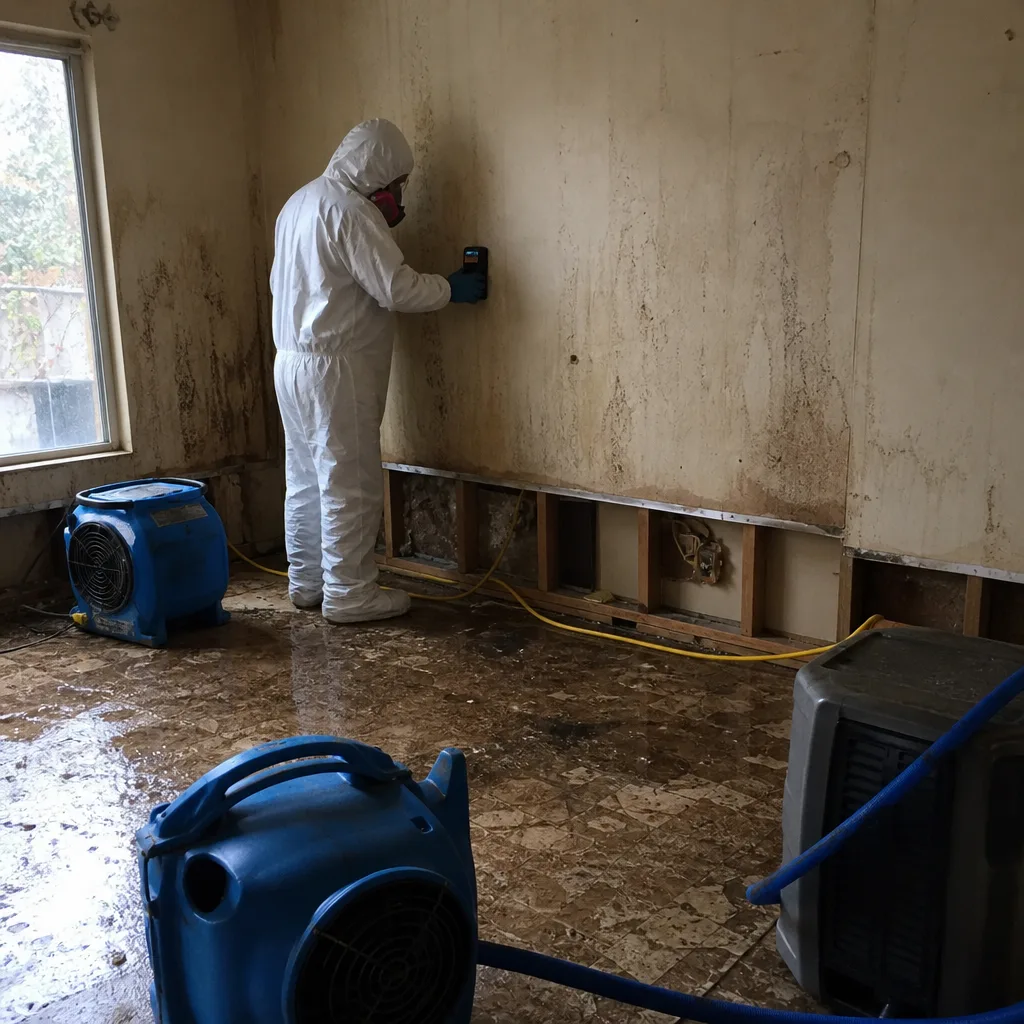
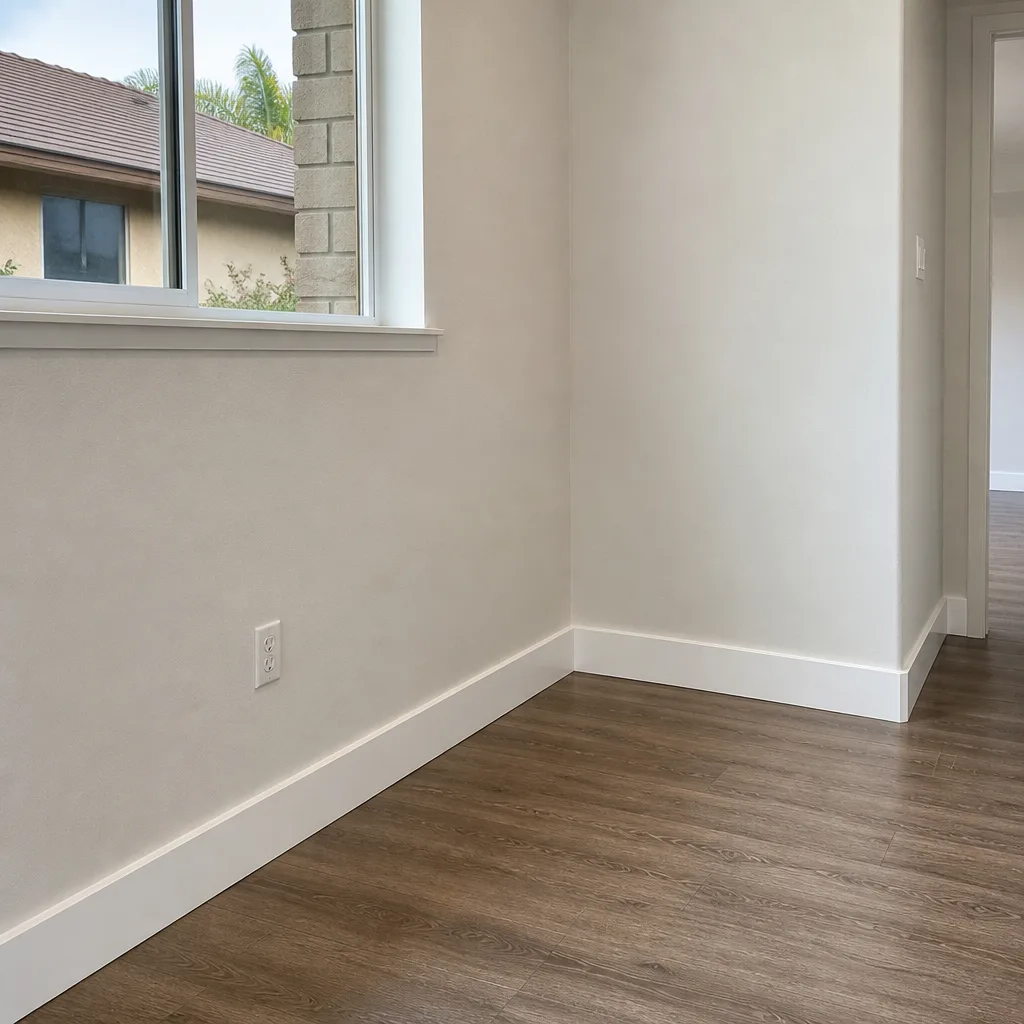
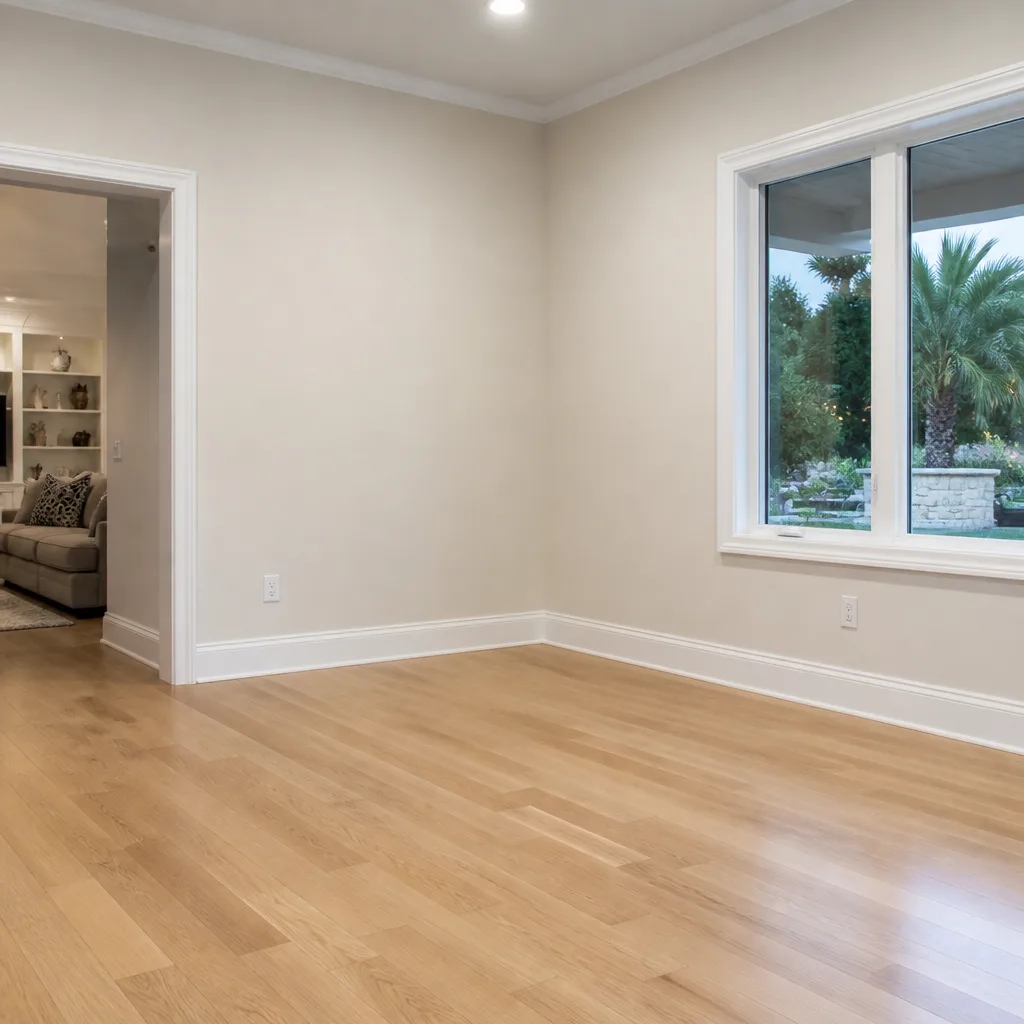
See the difference
 Before
 After
After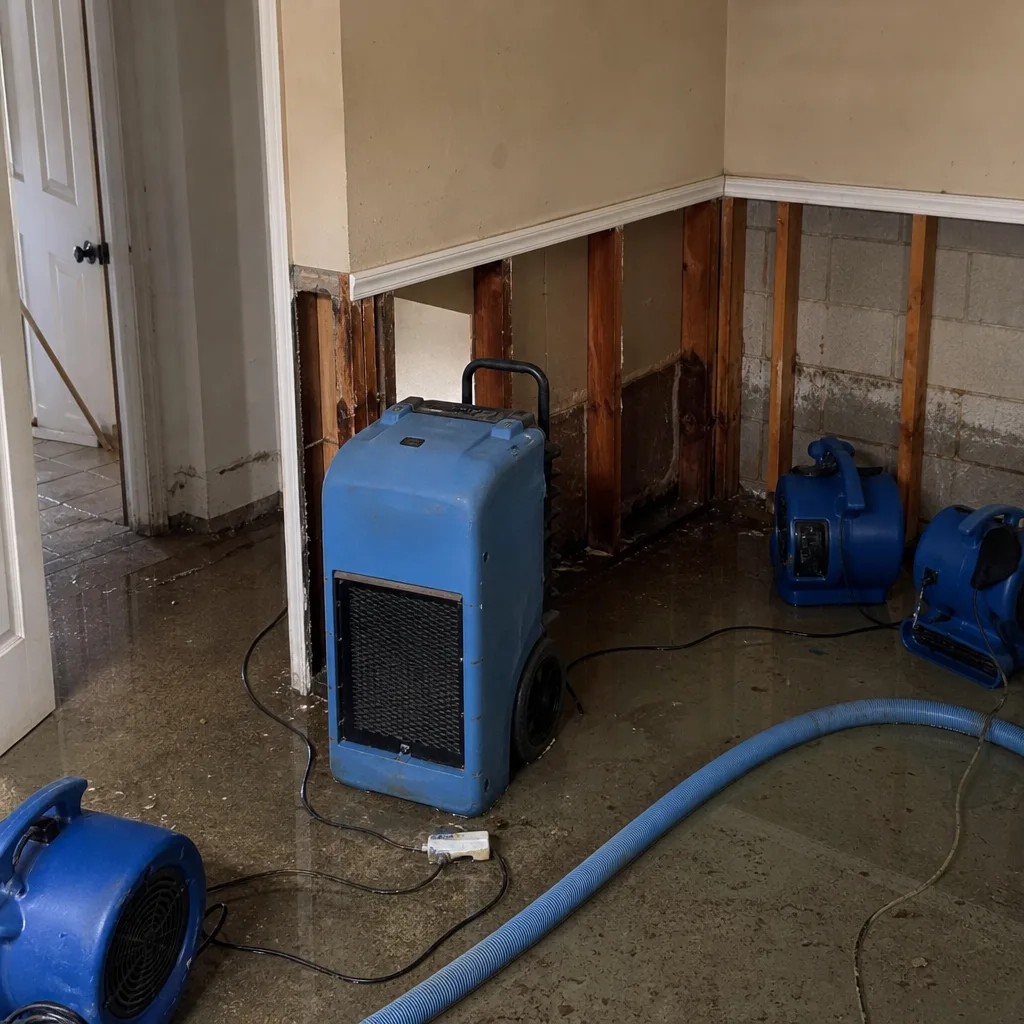 Before
 After
After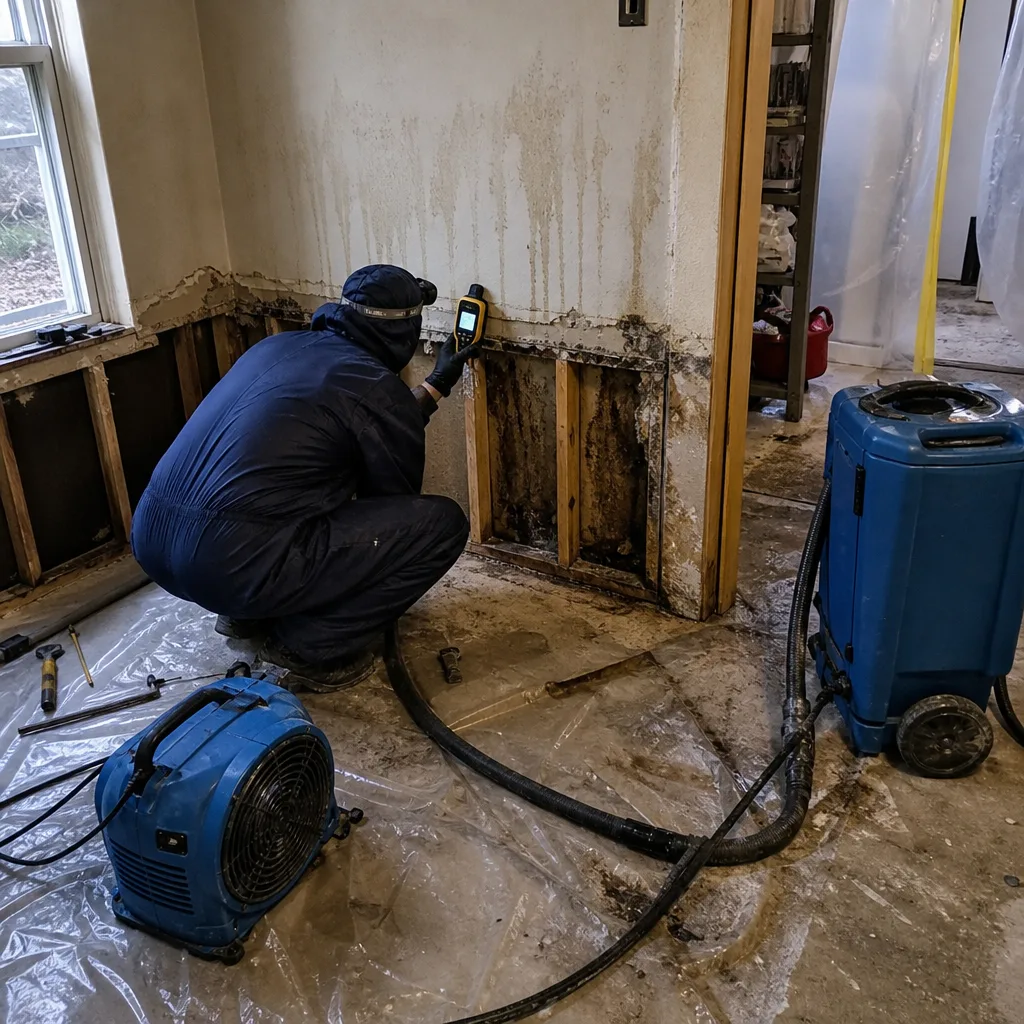 Before
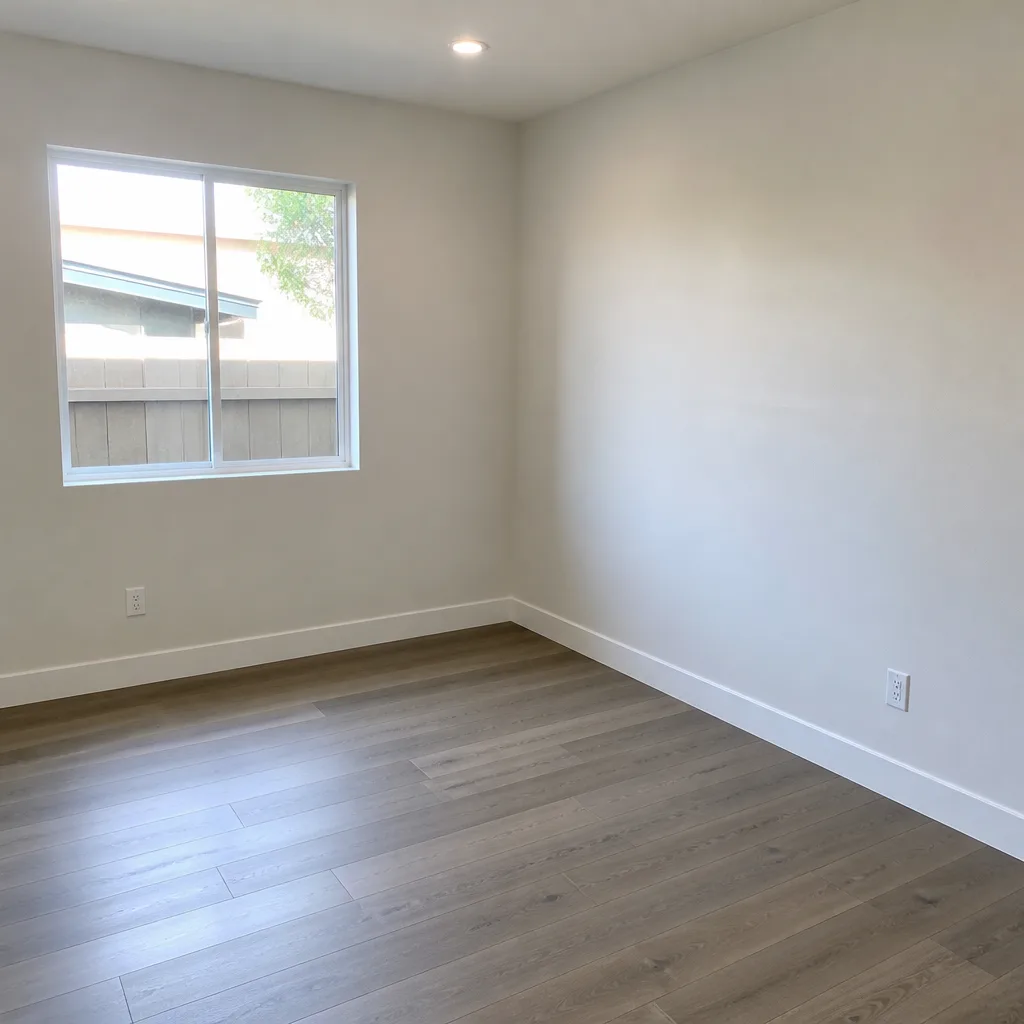 After
AfterCommon Water Damage Restoration Problems We See in Orange Homes
- Burst galvanized supply lines in pre-1960 crawlspaces. Orange’s central neighborhoods are full of original galvanized steel pipes that corrode from the inside out. We regularly find pinhole leaks and full ruptures in the crawlspaces of Craftsman bungalows on streets like East Maple and North Shaffer, where water soaks subfloor and joists before anyone sees a damp spot upstairs.
- Water heater failures in tight closet or garage installations. Many Orange homes, especially the 1950s-70s tract stock, have water heaters tucked into hallway closets or garage corners with no drain pan. A failed tank dumps 40 – 50 gallons into adjacent rooms, and in slab homes, that water runs under walls and into flooring before you notice.
- Slow slab leaks under 1960s radiant floor heating. Homes east of the 55 with Eichler-inspired designs embed heating lines in concrete. Leaks go undetected for weeks, saturating the slab and delaminating floor coverings from below. By the time you see buckling, the concrete needs extended low-pressure drying.
- Stop-work risks in the Old Towne Historic District. Orange’s Mills Act properties and National Register structures require preservation review before any demolition or material removal. Homeowners who let a generalist restoration company gut original lath-and-plaster or pull up redwood flooring can find themselves with a stop-work order and a much bigger bill.
Pricing for Water Damage Restoration in Orange, CA
For a contained leak with localized drying in Orange, expect $1,800 – $4,500. A full-room flood cleanup with extraction, structural drying, and antimicrobial treatment runs $3,500 – $7,000. Historic-home work in Old Towne that requires preservation-sensitive drying and material salvage typically lands between $6,000 and $12,000 because it’s slower, more labor-intensive, and often involves hand-tooled plaster matching. Radiant-slab leaks add $2,000 – $5,000 for concrete drying and floor removal. You’ll get a written price before any work starts, and a digital invoice texted to your phone that you can pay from the link. The number on the screen is the number you pay. Call (350) 207-2599 for a free estimate, and we’ll send a tech with a moisture meter rather than a sales pitch.
We Also Serve Cities Near Orange
Our crews handle Water Damage Restoration in Orange and the surrounding communities daily. If you’re in Villa Park, Tustin, Placentia, or Irvine, the same live-answer dispatch, written pricing, and tracked arrival times apply. Most of those neighborhoods are within a 30 – 45 minute response window, and our techs know the housing stock in each area well enough to arrive with the right drying plan already forming.
Serving Orange, CA - Our Local Coverage Area
We’re based in the Orange area and know this community well. Use the map below to see our service coverage - if you’re nearby, we can almost certainly help.
FAQs About Water Damage Restoration in Orange
Yes, if the work involves removing or altering original materials on a Mills Act property or within the Old Towne Orange National Register district, you need a preservation-approved scope of work before demolition or replacement. Our approach is to dry in place whenever possible, using Injectidry panels and low-grain dehumidifiers to stabilize original lath-and-plaster, Douglas fir flooring, and unpainted redwood siding without triggering a review board stop-work order. Call (350) 207-2599 and we’ll help you figure out whether your job needs approval before we touch anything.
We use Injectidry panels placed on top of the finished floor, which pull water up through the boards and out through the panel’s vacuum system while dehumidifiers handle the moist air. This works because Orange’s raised-foundation bungalows leave the subfloor accessible from the crawlspace, so we can dry from both sides simultaneously. We log moisture readings throughout the process and stop only when the wood is below 12% moisture content, which usually takes 3 – 5 days for a saturated floor in Orange’s dry climate.
Most lath-and-plaster walls in Orange’s Old Towne homes can be saved if drying starts within 48 – 72 hours. We control the drying rate with low-grain refrigerant dehumidifiers and indirect airflow, because plaster dried too aggressively cracks and delaminates from its wooden lath. If sections do need replacement, we match the original texture and thickness rather than defaulting to drywall, which keeps the home’s historic character intact and avoids preservation review complications.
Start extraction within 24 hours and get professional drying equipment running within 48 hours, because Orange’s warm temperatures accelerate mold growth in damp building materials. We apply antimicrobial treatment to affected surfaces after extraction and before drying, then monitor humidity with psychrometric readings until the structure is actually dry. In Orange’s Mediterranean climate, a contained leak that gets proper drying within two days rarely develops mold; one that sits damp for a week almost always does.
We locate the leak with acoustic and thermal imaging, then isolate the affected loop so the system can keep running elsewhere if possible. Drying a saturated slab requires slab-specific drying mats and moisture probes driven into the concrete, because standard air movers can’t pull water out of a 4-inch slab. This process usually takes 5 – 10 days depending on slab thickness and how long the leak ran, and it’s one of the few cases where we recommend removing affected floor coverings to expose the concrete for drying. Call (350) 207-2599 for an exact quote on your Orange home, estimates are free.
Written by Blake Sorensen, Owner at Wendell Restoration Orange County, serving Orange, CA.