
Last updated October 16, 2026
 Water damage drying
 Fire & smoke cleanup
 Mold remediation
 Storm response
 Sewage cleanup
 Reconstruction
Free visual inspection and a written scope of work before any mitigation begins - photos, moisture readings, and drying logs go in your claim file
The scope we write is the scope we bill. Anything new gets shown to you, in writing, before we touch it.
Get your free estimateThe Complete Guide to Damage Restoration in Orange County
Most Orange County homeowners call three restoration companies before they find one willing to put a price in writing. The first two show up, start ripping out drywall, and hand over a bill that looks nothing like what was discussed on the phone. The companies that depend on this business model are counting on you being too overwhelmed to ask questions. This guide walks you through the entire damage restoration process in Orange County from the first call to the final coat of paint, so you can make decisions in the right order, with the right information, before anyone touches your floors. For damage restoration warning signs every Orange County homeowner should know, see our dedicated guide.
Quick Answer
Damage restoration in Orange County is a five-phase process: emergency mitigation, moisture mapping, structural drying, remediation, and reconstruction. Water damage costs here typically run $1,800 to $6,500 for a single room, mold remediation adds $1,500 to $6,000 depending on square footage, and full reconstruction after a major loss can reach $15,000 to $45,000. For a detailed breakdown, see our Damage Restoration Cost Breakdown: The Orange County Homeowner’s Reference for 2026. The single most important decision you’ll make is hiring a company that gives you a written price before any work starts, because everything else flows from that.
Restoration work we handle
Table of Contents
- The Five Phases of a Restoration Job (and What Each Costs)
- Why Orange County’s Coastal Humidity Changes Everything
- How to Read a Moisture Report Like a Pro
- Mitigation Company vs. Full-Service Contractor: The $5,000 Difference
- What the Relay Visibility Guarantee Looks Like in Practice
- Who Deals With Your Insurance Adjuster
- Common Mistakes to Avoid
- When to Call a Professional
- Frequently Asked Questions
The Five Phases of a Restoration Job (and What Each Costs)
A restoration job is not one service. It’s a sequence, and each phase has its own crew, equipment, timeline, and price tag. Knowing the sequence means you can spot when a contractor is trying to skip a step or charge you twice for the same phase. Here’s exactly what happens, in order.
Phase 1: Emergency Mitigation ($800 to $2,500)
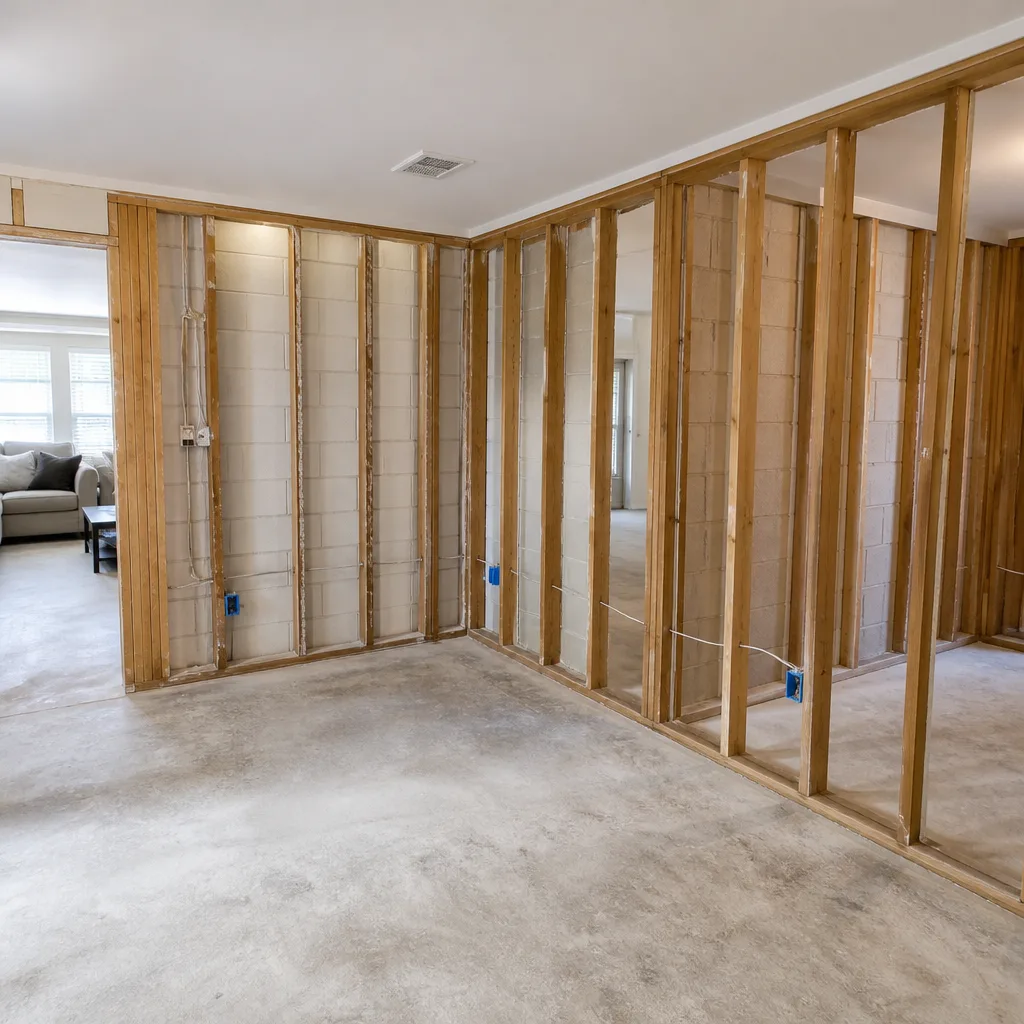
Mitigation is stop-the-bleeding work. It happens in the first hours after a pipe bursts, a toilet overflows, or ocean-driven rain breaches a window in Huntington Beach or Newport Beach. The crew extracts standing water, cuts out saturated drywall, removes wet carpet and pad, and sets up the first round of dehumidifiers and air movers. In Orange County, mitigation typically starts the same day you call, because water that sits overnight in a warm coastal climate starts breeding mold within 48 to 72 hours. This is where our water damage restoration services in Orange County begin: the written scope comes first, then we move fast.
What you pay for in this phase: labor to extract water, equipment drop-off and setup, demolition of unsalvageable materials, and the initial assessment. Speed matters more than thoroughness here, and that’s a tradeoff you should understand going in. You want a company that can get a crew out fast but still hands you a price in writing before the first tool comes off the truck.
Phase 2: Moisture Mapping ($300 to $800)
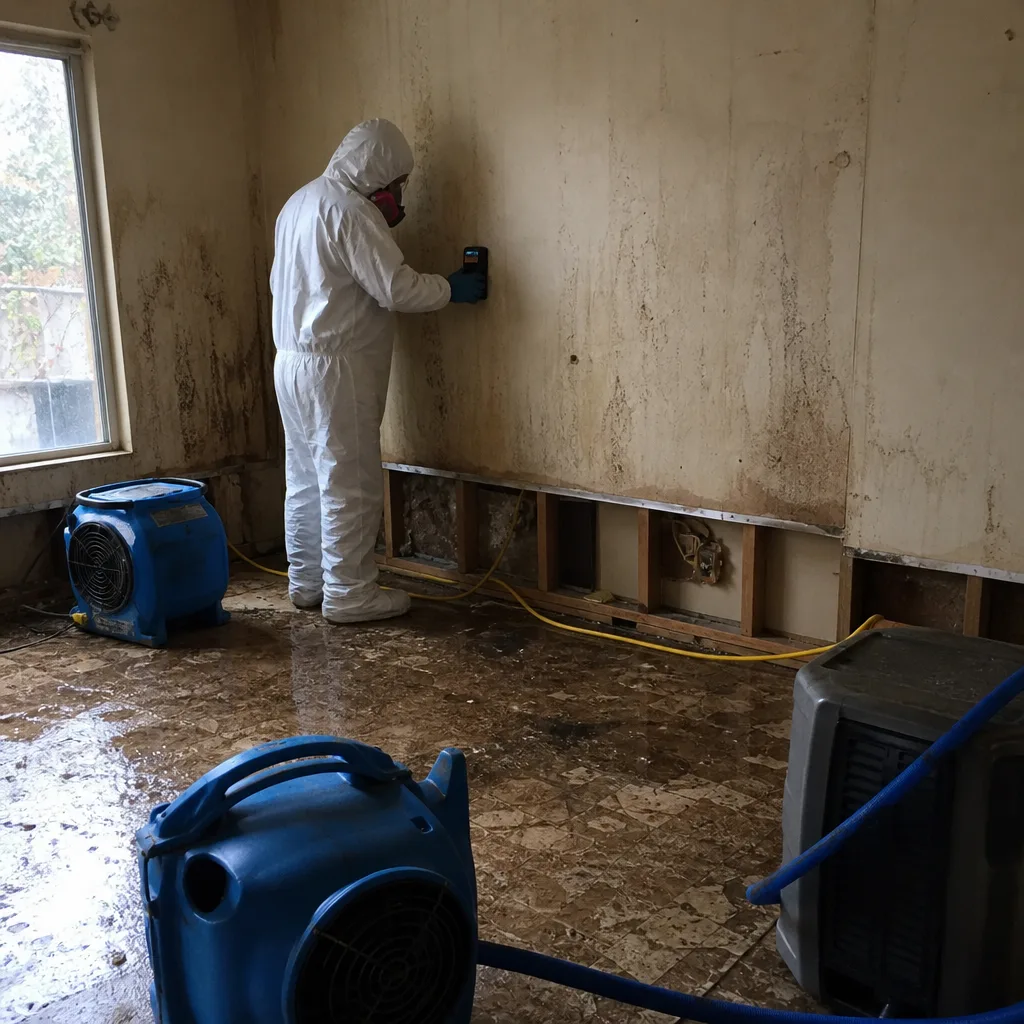
After the visible water is gone, the real work starts. Moisture mapping is the diagnostic phase where a technician uses penetrating moisture meters, thermal imaging cameras, and sometimes in-wall probes to find water that traveled behind baseboards, under floorboards, or into wall cavities. This is where restoration companies separate themselves. A cheap mitigation-only operator will dry what they can see and call it done. A full-service contractor maps the full extent of the damage so nothing hidden gets left behind. Think of it as an MRI for your house.
The map produced in this phase becomes the backbone of everything that follows. It tells the crew which walls need to stay open, where drying chambers need to go, and when the structure actually hits dry standard. If a company skips this phase or does a rushed version of it, you’ll find out weeks later when a musty smell creeps back into the living room.
Phase 3: Structural Drying ($25 to $45 per day per room)
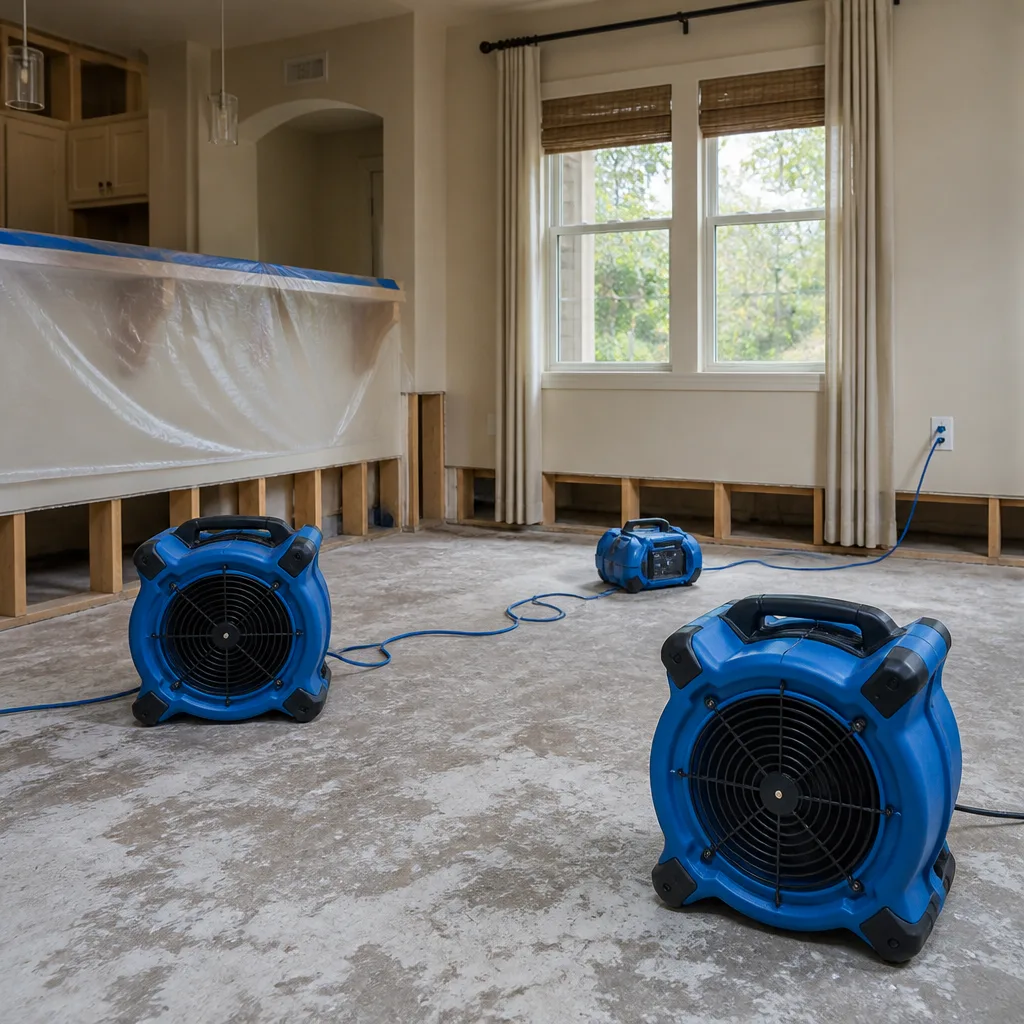
Structural drying is where the science shows up. This phase uses commercial-grade dehumidifiers and high-velocity air movers professionally deployed under IICRC, RIA, and IFA standards. We use equipment from Dri-Eaz, Phoenix, XPOWER, B-Air, and Injectidry, the same brands used on large commercial loss sites. The goal is to drive moisture out of framing, subfloor, and drywall until the entire structure reaches equilibrium with the surrounding environment.
The critical measurement here is called the psychrometric drying curve, which tracks the air’s moisture level over time so we know when your home is truly dry, not just surface-dry. In Orange County, this phase typically runs 3 to 7 days. A company earns its fee in this phase by checking readings daily, repositioning equipment, and documenting the drying curve rather than just leaving blowers running until you ask when they’ll be picked up.
Phase 4: Remediation ($1,500 to $6,000+)
If microbial growth is found during the moisture mapping phase, remediation steps in before reconstruction. Remediation is the process of containing the affected area, removing contaminated materials, treating the underlying structure with antimicrobial solutions, and verifying with post-remediation testing that spore counts are back to normal background levels. Our mold remediation service in Orange County handles this phase as a controlled, documented process, not a spray-and-pray pass with bleach.
Orange County’s specific climate makes remediation an oversized concern. Homes near the coast in Laguna Beach, Dana Point, and San Clemente sit in a marine layer zone where ambient humidity regularly exceeds 70 percent for months at a time. That means mold growth after water damage is not a maybe. It’s a when. If your mitigation team didn’t get to the job within the first 48 hours, assume you’ll need at least localized remediation, and build that into your budget from the start.
Phase 5: Reconstruction ($3,000 to $45,000+)
Reconstruction is rebuilding what was removed: drywall, insulation, baseboards, flooring, paint, and sometimes cabinetry or electrical. This phase is scoped, scheduled, and priced in writing like a remodel, not an emergency. The work should follow the same standards as any quality residential construction project. This is where our water damage repair services in Orange County come in, because half-measures in this phase mean visible seams, mismatched texture, and drywall that cracks at the joints within a year.
Reconstruction costs vary wildly based on the materials your home was built with. A 1950s ranch in Costa Mesa with plaster walls costs more to match than a 2010s stucco home in Irvine with standard drywall. A good estimator walks the job with you and explains why the price is what it is, line by line.
Why Orange County’s Coastal Humidity Changes Everything
Orange County is not one climate. It’s three. The coast from Seal Beach to San Clemente sits in a marine layer that rolls in most summer evenings and can stick around until noon the next day. Inland areas like Anaheim, Orange, and Fullerton run 5 to 10 degrees warmer with noticeably drier air. And the foothill communities like Rancho Santa Margarita and Trabuco Canyon get heat that cooks moisture out of a structure fast but can also create uneven drying conditions. A restoration contractor who treats all of Orange County the same is making an expensive mistake on your dime.
The psychrometric drying curve, the scientific model that tracks how quickly moisture leaves building materials, behaves differently in each of these zones. Along the coast, high ambient humidity slows the rate at which wet drywall releases moisture into the air, which means drying times stretch. A wall that would be dry in three days in Fullerton might take six in Corona del Mar. That’s not a contractor stalling. That’s physics, but only if the contractor is actually tracking it with daily moisture meter readings. If you’re just seeing blowers running with no data to back up the timeline, that’s a different story.
So what should a Orange County homeowner do with this information? Ask the question directly: “What’s the ambient humidity right now, and what is our target moisture content before you call this dry?” If the answer is a blank stare, you’re talking to an equipment rental company masquerading as a restoration firm. If the answer includes specific grain counts or moisture content percentages, you’re working with professionals.
How to Read a Moisture Report Like a Pro
A moisture report is the single most important document in your restoration job, and most homeowners never ask to see it. That’s a problem, because the report is your verification that the work was actually done before the crew packs up and drives away. Here’s what to look for.
- Baseline readings from the first day. Every affected room should have an initial moisture content number, typically expressed as a percentage or a moisture content equivalent. This is your starting line. If there’s no baseline, there’s no way to prove drying happened.
- Daily or every-other-day readings from the same locations. A legitimate drying program checks the same spots on the same schedule and logs the numbers. The trend line should move down steadily. If readings have flatlined for two or three days, the equipment needs to be repositioned or the drying chamber needs to be adjusted.
- Target dry standard for each material. Drywall has a target. Subfloor has a target. Hardwood has a target. The report should list the actual number and the goal for each material type in each room. Without goals, “dry” is just a feeling.
- Equipment log. How many air movers, how many dehumidifiers, where they were placed, and when they were moved. This cross-checks against your invoice and against the daily readings. If the log says two dehumidifiers ran for five days, but your report shows readings dropping by 25 percent in a single day, something doesn’t add up.
- Final verification date. The last reading should be signed off and dated, with the moisture content at or below the dry standard for every material. This is the moment the job is done. Not when the blowers get loud, but when the numbers say the structure is dry.
In our experience, fewer than half of Orange County restoration jobs include a moisture report that checks all five boxes. The ones that do come from companies that have their process documented and their technicians trained. If you’re not offered a report, ask for one. A company that hesitates is a company that doesn’t want you checking their work.
Mitigation Company vs. Full-Service Contractor: The $5,000 Difference
Here’s the structural truth about this industry that no one tells you until it’s too late: there are two distinct types of companies operating under the “restoration” banner, and they make money in completely different ways. A mitigation-only company makes its money on the emergency phase. They extract water, set up equipment, and bill your insurance. When the drying is done, they pack up and leave. You’re on your own to find someone to put your house back together.
A full-service restoration contractor, by contrast, handles all five phases. The same company that extracted the water, ran the drying program, and documented the moisture readings also rebuilds the walls, matches the paint, and pulls the permit if one’s needed. Learn more about damage restoration permits, codes & inspections in CA: what you need to know. The advantage is continuity. The person who knows exactly what was cut out is the same person putting it back. The disadvantage is price, because full-service contractors carry more overhead and their estimates reflect that.
So which is right for you? If you’re on a tight budget and have the time and patience to project-manage a reconstruction yourself, starting with a mitigation-only company can save money. But here’s the catch: most insurance carriers in Orange County prefer a single scope of work from a single contractor. When you split the job between two companies, the carrier has two invoices, two dry logs, and two narratives to reconcile. That friction often eats the savings you thought you were getting. Our experience across hundreds of Wendell Restoration Orange County jobs is that the worst-case scenario is hiring mitigation-only by accident, then discovering three weeks later that the reconstruction bid is $5,000 higher than it would have been as a bundled scope. The best-case scenario is hiring a full-service company that gives you the written price up front so you can decide with your eyes open.
What the Relay Visibility Guarantee Looks Like in Practice
Most damage restoration horror stories are not about bad workmanship. They’re about opacity. The crew shows up late, or not at all. The price changes after the walls are open. The invoice arrives three weeks later with line items no one explained. The homeowner has no idea what actually happened in their own house. The Relay Visibility Guarantee exists to make that impossible, and it’s built into every job we do.
Here’s what it means on the ground. You book in a tap, either online or by calling (350) 207-2599. A live person answers, 24/7, because water damage does not keep business hours and neither do we. You get a live arrival time you can track, not a vague four-hour window. The technician who shows up is background-checked and in uniform, so you know exactly who is walking through your door before they ring the bell. Before any work starts, you get a written price, and a digital invoice is texted to you so you can pay from the link. The number on the screen is the number you pay. And at each phase milestone, before-and-after photos are texted to you as documentation that the work was done. If it’s not done right, the 365-Day Done Right Promise kicks in and we make it right, in writing, on every single job.
This is The Relay Standard. It’s not a marketing slogan. It’s a sequence of verifiable actions that can be checked at every step, and it’s the reason a homeowner can go from panic to calm in the first hour instead of the first week.
Who Deals With Your Insurance Adjuster
The insurance question comes up in nearly every Orange County restoration job, and it usually comes up wrong. The first thing homeowners ask is, “Will insurance cover this?” The better question is, “How do I make sure the adjuster sees the full scope of the damage?” Because insurance companies don’t deny based on what you tell them. They approve or deny based on what the documentation proves.
A good restoration company documents the job from minute one with photos and moisture readings, because that’s what gets an adjuster to approve the full scope. We photograph the damage before anything is touched, we log the moisture readings every day, and we provide a written scope of work that describes exactly what was done and why. We coordinate directly with your adjuster, submit the dry log and photos, and handle the back-and-forth. That’s not a value-add. That’s the job.
Here’s the part most people miss: the adjuster works for the insurance company, not for you. Their job is to close the claim efficiently. Your restoration company’s job is to make sure the claim that gets closed covers the actual cost of putting your house back. The way you do that is with documentation that’s thorough enough to withstand scrutiny. Before-and-after photos at each phase milestone, moisture readings that show the drying curve, and a written scope that matches the work actually performed. If your restoration company can’t produce those three things, your adjuster’s job just got easier and yours just got harder.
Common Mistakes to Avoid
- Calling three companies and going with the first one that shows up. You’re not choosing speed. You’re choosing whoever had the shortest dispatch queue. Call three companies, get three written scopes, and compare them. The one that puts a price in writing before touching the floors is already ahead of the other two.
- Treating the insurance adjuster as your advocate. The adjuster’s employer signs the check. Your restoration company should be documenting enough to make the adjuster’s job easy, which is not the same thing as asking the adjuster what you should do.
- Skipping the moisture report. If you don’t have baseline readings, daily readings, and a final verification, you cannot prove the job was done. You also can’t prove it wasn’t. That ambiguity always costs the homeowner money.
- Letting a mitigation-only company handle a full reconstruction. They’ll sub it out or hand you a list of contractors. Either way, you’re now the general contractor, and you’re paying two margins instead of one.
- Waiting 48 hours to call. In coastal Orange County, mold colonization starts fast. Every day you wait moves you from a drying job to a remediation job, which costs three to five times more.
- Accepting a verbal estimate as binding. In California, a verbal estimate is legally worth approximately nothing. The written scope is the only document that protects you. If the company won’t write it down, walk away.
When to Call a Professional
Call immediately if water has been standing for more than 24 hours, if the water came from a sewage line or toilet, if you can see dark staining spreading on drywall or baseboards, if there’s a persistent musty smell you can’t locate, or if the affected area includes electrical outlets, HVAC ducts, or load-bearing framing. These are not DIY situations. Delaying a professional response in any of these scenarios turns a $2,000 drying job into a $20,000 rebuild, and that’s a conservative number. Wendell Restoration Orange County offers free estimates across Orange County. Call (350) 207-2599, speak to a live person, and get a written scope before you spend a dollar.
Frequently Asked Questions
Damage restoration in Orange County typically costs $1,800 to $6,500 for single-room water damage with drying, $1,500 to $6,000 for mold remediation, and $3,000 to $45,000 for full reconstruction depending on the size of the loss and your home’s finishes. The biggest variable is whether the job stays in the drying phase or moves into remediation and reconstruction, which is why the first 48 hours matter so much. Call (350) 207-2599 for a free written estimate.
Most Orange County homeowners’ policies cover sudden and accidental water damage, such as a burst pipe or a supply-line failure, but exclude gradual leaks, maintenance issues, and some mold exclusions. The coverage decision usually hinges on the documentation your restoration company provides, which is why photo proof and moisture readings matter so much. We coordinate directly with your adjuster and provide the documentation they need to process your claim.
In Orange County, a live person answers our phone 24/7 and we dispatch same-day for emergency water damage from San Clemente to La Habra. You get a live arrival time you can track, not a four-hour window. The technician who arrives is background-checked, uniformed, and carrying the written scope before any work starts.
If mold growth is confirmed in wall cavities, under flooring, or in HVAC ducting, cleaning the visible surface is not enough, because the colony regrows from the roots left behind. In coastal Orange County’s humidity, surface cleaning alone has a high failure rate. A proper remediation includes containment, removal of contaminated material, antimicrobial treatment, and post-remediation verification.
Restoration is the process of returning your home to a dry, clean, safe condition after water or mold damage. Reconstruction is the rebuild phase that puts walls, flooring, trim, and paint back. Restoration gets you to zero; reconstruction gets you back to whole. A full-service contractor handles both phases under one written scope.
Ask for the moisture report. It should show baseline readings from day one, daily readings from the same locations, target dry standard for each material, an equipment log, and a final verification date with all readings at or below dry standard. Add to that before-and-after photos from each phase and a written scope that matches the work performed, and you have verification that stands up to an insurance adjuster or a warranty claim.
The Bottom Line
Damage restoration in Orange County is a process with a sequence, and the people who control the sequence control the outcome. Know the five phases. Know what each one costs. Know how coastal humidity changes timelines. Know how to read a moisture report. And know the single most important rule: the written scope comes before any work starts. A company that puts the price in writing, gives you a live arrival time, documents each phase with photos, and backs it all with a 365-Day Done Right Promise is not asking you to trust them. They’re giving you the tools to verify them. Explore more guides & resources on protecting your home.
Written by Blake Sorensen, Owner at Wendell Restoration Orange County, serving Orange County since 2006.
See the difference
 Before
 After
After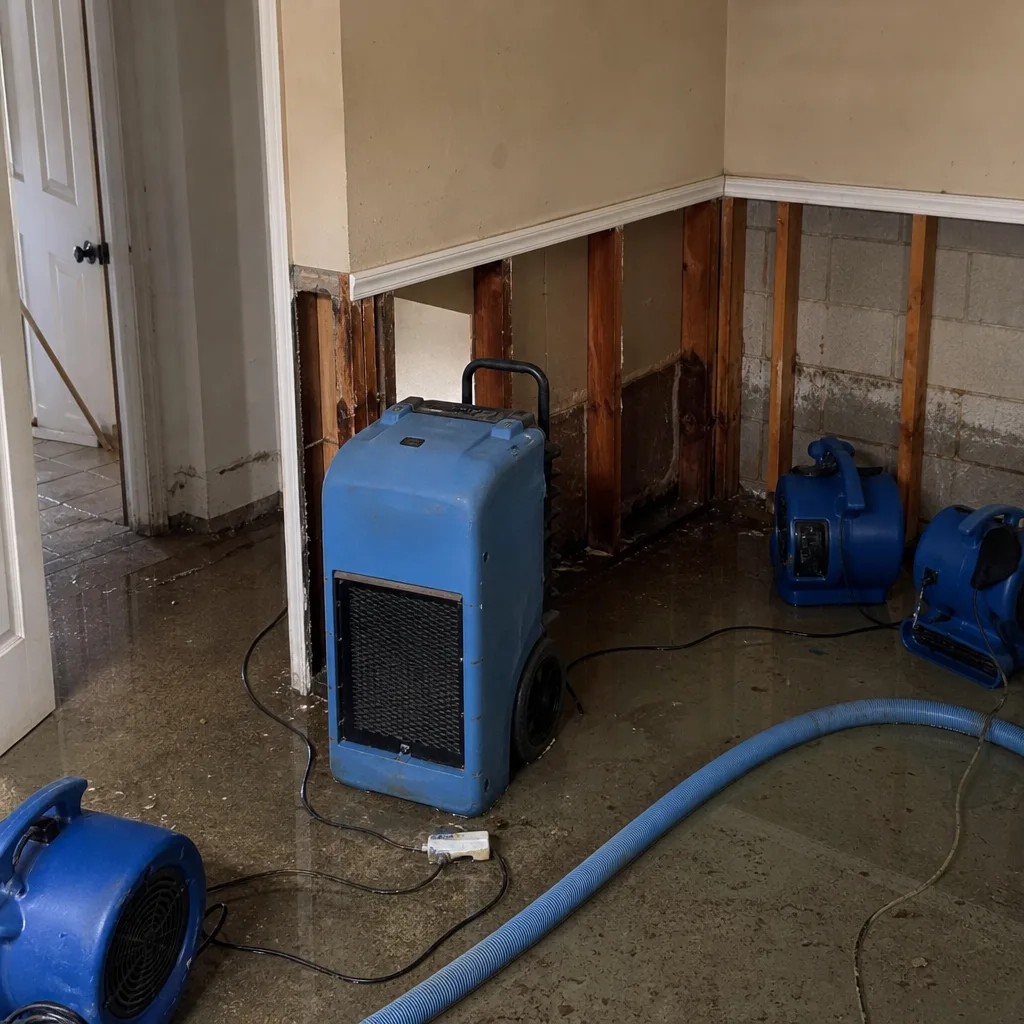 Before
 After
After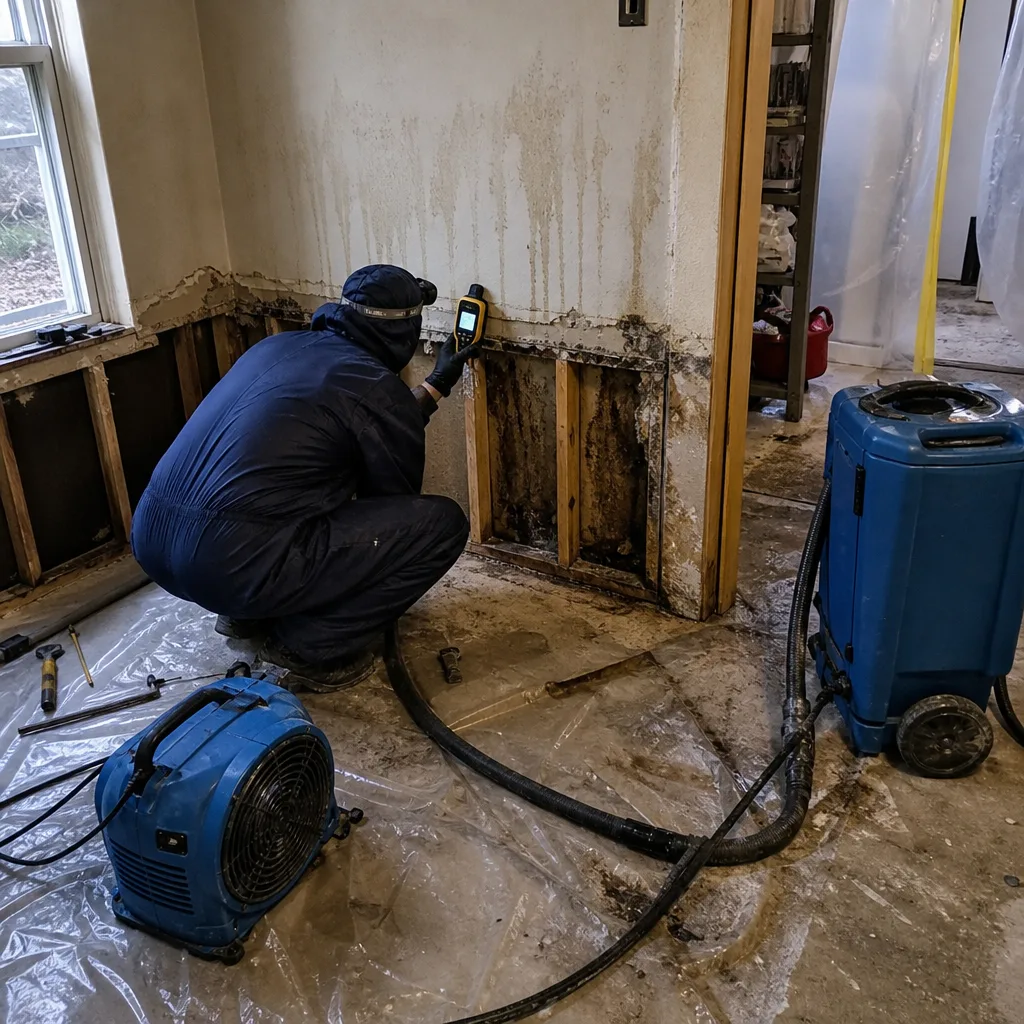 Before
 After
After