
Last updated October 16, 2026
 Water damage drying
 Fire & smoke cleanup
 Mold remediation
 Storm response
 Sewage cleanup
 Reconstruction
Free visual inspection and a written scope of work before any mitigation begins - photos, moisture readings, and drying logs go in your claim file
The scope we write is the scope we bill. Anything new gets shown to you, in writing, before we touch it.
Get your free estimateDamage Restoration Warning Signs: A Orange County Homeowner’s Reference Guide
A water stain on your ceiling that “dried out and stopped growing” is not a resolved problem. It’s a moisture reading between 16 and 19 percent that doesn’t trigger a moisture meter alarm but is actively feeding mold colonies inside the cavity. Most Orange County homeowners wait for the musty smell to show up, but by then the damage has been spreading for weeks. This guide teaches you to read the earlier, quieter signals your house sends long before the smell arrives, so you catch water damage when it’s still a repair instead of a rebuild. For more guides & resources, visit our blog.
Quick Answer
The most important water damage warning signs in Orange County homes are not the dramatic ones: a stain that keeps changing shape, a floor plank that cups slightly at one edge, a chalky white residue on an exterior stucco wall, and a smell you can’t place but only notice in one room. A stain that appears “dry” can still hold active moisture inside the wall cavity. If you see any of these, the right first move is a free moisture mapping call, not waiting to see if it gets worse.
Restoration work we handle
Table of Contents
- Cosmetic Stain vs. Active Moisture: The Tap Test
- Orange County’s Most Misread Warning Sign: Efflorescence on Stucco
- Flooring Signals by Material Type
- The Three Smells: Two That Mean Mold, One That Doesn’t
- When to Get a Free Moisture Mapping vs. Full Assessment
- What to Say on the Phone to Get a Straight Answer
- The Orange County Water Damage Timeline: How Fast It Spreads
- Prevention Signals: What to Check Quarterly
Cosmetic Stain vs. Active Moisture: The Tap Test
Most homeowners assume that if a ceiling stain isn’t growing and feels dry to the touch, the leak stopped and the problem is over. In our experience across Orange County, that assumption is wrong more than half the time. A stain that has “stabilized” often means the water source has slowed to a seep or has found a new path, not that it stopped. The drywall behind the stain can hold moisture at 16 to 19 percent, which is below the 20 percent threshold most moisture meters flag as “wet,” but still high enough to feed mold growth inside an enclosed wall cavity.
Here’s a tap test anyone can do safely. Use your knuckle, not a tool, and tap the stained area, then tap an area of the same wall or ceiling two feet away. Dry drywall sounds sharp and hollow, like a quick knock. Water-compromised drywall sounds dull, deeper, and shorter, like knocking on a paperback book. Even a small sound difference is worth a closer look. A home inspector once told us that drywall with 17 percent moisture reads as “slightly concerning” on a meter but sounds obviously different to a trained ear. You don’t need a trained ear to compare two sounds in your own hallway.
The second test is visual. Look at the edges of the stain. If the edge is a crisp line, the water likely came and went in a short burst, and the stain is mostly cosmetic. If the edge is feathering, with a gradient that fades into the surrounding paint, moisture is still moving through the gypsum. That feathering is water wicking sideways, pulling mineral salts to the surface as it evaporates. In Orange County’s dry climate, evaporation happens fast, which makes stains look “old” sooner. The wall cavity tells a different story.
The third clue is paint behavior. If the paint over a stain is bubbling, flaking, or has a slight sheen difference from the surrounding surface, moisture is still present under the paint film. Paint that looks baked, cracked like a dry riverbed, or yellowed specifically around a stain also points to recurring moisture rather than a one-time event. None of these require special tools. They require looking at something you probably glance at every day.
If any of these three signals show up, the next step is not a patch job. A patch over active moisture traps the water and accelerates mold. The next step is a moisture mapping assessment, which uses professional-grade meters to read moisture levels across the entire affected area, not just the visible stain. Our team at Wendell Restoration Orange County home performs these assessments with equipment you won’t find at a hardware store, and the mapping tells you exactly how far the moisture has traveled behind the wall.
Orange County’s Most Misread Warning Sign: Efflorescence on Stucco
If you live within five miles of the coast in Orange County, from Seal Beach down to San Clemente, you’ve probably seen it: white, chalky, sometimes fluffy deposits on a stucco wall, a block retaining wall, or a concrete foundation stem. Most people dismiss it as “normal weathering” or “salt air.” Some of it is normal weathering. A good portion of it is early-stage water intrusion, and telling the difference matters because one of them gets worse and the other doesn’t.
The white deposit is called efflorescence, and it forms when water moves through masonry or stucco, dissolving mineral salts inside the material, then evaporates at the surface and leaves the salt behind. The presence of efflorescence means water has moved through the wall. That’s a fact. What matters is whether the water is still moving.
Here’s the distinction that most Orange County homeowners never hear. Efflorescence from a one-time event, like a heavy winter storm or an irrigation line that sprayed a wall for two weeks before you fixed it, looks uniform, flat, and dusty. It brushes off easily with a dry rag. Efflorescence from an ongoing moisture source looks slightly different: it reappears in the same spot after you clean it, it sits in vertical streaks below a specific point, or it has a slightly crystalline, sparkly texture. That sparkle is fresh mineral crystallization, and it means water is actively evaporating from the wall right now.
Coastal Orange County has a particular version of this problem. Homes in Newport Beach, Huntington Beach, Laguna Beach, and Dana Point sit in a marine layer zone where the air is humid at night and dry during the day. That cycle pulls moisture into porous stucco, then dries it out, over and over. When a stucco wall has a crack, a failed seal around a window, or a leaking deck flashing, that daily cycle draws salt-laden water into the wall and pushes it back out as efflorescence. The homeowner sees it as a slowly growing white patch and thinks it’s just what stucco does near the beach. What’s actually happening is the wall is breathing water.
A related signal specific to Orange County hillside homes is efflorescence on retaining walls. In areas like Mission Viejo, San Juan Capistrano, and parts of Anaheim Hills, retaining walls hold back soil that stays damp from irrigation. If the wall’s drainage system is clogged or was never installed correctly, water pressure builds behind the wall and pushes through as efflorescence, often accompanied by a dark damp patch that never fully dries. That’s not weathering. That’s a drainage failure, and it can undermine the wall over time.
The practical step is simple. Clean a small section of the efflorescence with a dry brush, take a photo, and check it again in two weeks. If it comes back, you have an active moisture pathway. If it stays clean, you probably had a one-time event. Either way, a professional can confirm the source with a moisture meter on the wall surface and, if needed, a thermal imaging scan that shows temperature differences behind the stucco. We treat stucco and masonry moisture issues as part of our Water Damage Restoration in Orange County services.
Flooring Signals by Material Type
Flooring is the most honest material in your house. It can’t hide what water is doing to it. Each flooring type fails in a specific way, and reading that failure tells you where the water is coming from and how long it’s been there. Most Orange County homes mix flooring types, so you’ll often see two different signals in the same house that point to the same leak.
Hardwood: Cupping and Crowning
When a hardwood plank curls up at the edges and forms a shallow U shape, that’s cupping. It means moisture is coming from below the floor: a crawl space, a slab leak, or a wet subfloor. The bottom of the plank absorbs moisture and swells, pulling the edges up. Cupping usually shows up first along exterior walls, near plumbing runs, or in the hallway outside a bathroom.
If a plank curls up in the middle and forms an inverted U, that’s crowning. It means the top of the plank was wet at some point and the edges were sanded or the board was refinished while cupped. Crowning often appears after a homeowner or a handyman tries to sand down a cupped floor without addressing the moisture source. In Orange County, we see crowning most often in older homes in Fullerton, Orange, and Santa Ana that had a past water event, a quick floor sanding, and no moisture assessment.
The takeaway for cupping: if you can see daylight under the edges of a plank, or if the plank feels raised when you run a bare foot across it, you have active moisture below the floor. This is a slab leak or crawl space issue in most cases, and it needs a professional look, not a dehumidifier in the room.
Tile: Grout Lines and Hollow Spots
Tile itself doesn’t absorb much water, but grout does. When water moves under tile, the grout lines darken along a specific path, then crack, then lift. A cracked grout line running in a straight line across a floor often traces a pipe run below the slab. A dark grout line that doesn’t dry out after 48 hours means water is being actively fed from somewhere. And if you tap a tile and it sounds hollow in one area but solid everywhere else, the thinset mortar has lost its bond, usually because moisture dissolved the bond layer. That tile will eventually crack or pop loose. This signal is common in Orange County kitchens and bathrooms where a slow drain leak or a cracked supply line has been seeping under the flooring for months.
Laminate and Vinyl Plank: Spongy Edges and Seam Peaks
Laminate and vinyl plank flooring hide water better than any other material, which makes them dangerous. By the time you see a problem, the damage under the floor is usually significant. The first sign is a seam that starts to peak, where two planks push against each other and form a slight ridge. That’s the core of the laminate swelling with moisture. The second sign is a soft, spongy feel when you step on a specific area, especially near an exterior door, a dishwasher, or a refrigerator.
A third and often missed sign is a vinyl plank floor that starts to show a slight gap at the wall edge in one area but not others. That indicates subfloor movement from moisture expansion. In Orange County, we see this frequently in second-story condo units in Irvine and Lake Forest where a washing machine pan overflowed and the water traveled under the flooring to the far wall. The homeowner notices a gap near the baseboard weeks before any visible water stain appears on the ceiling below.
Any of these flooring signals is a reason to have the area assessed with a moisture meter. Our Water Damage Repair in Orange County process starts with mapping the moisture across the entire floor, not just the visible area, because water travels along subfloor seams and under baseboards in patterns that are not visible from above.
The Three Smells: Two That Mean Mold, One That Doesn’t
Smell is the warning sign homeowners mention most often. But not all water-related smells mean the same thing, and the distinction changes the scope of the fix dramatically. Here are the three smells and what each one actually tells you.
Smell One: Damp Earth, Like a Basement After Rain
This is the smell of active mold growth. It’s musty, organic, and slightly sweet, like wet leaves or a forest floor. You’ll notice it as soon as you walk into a room, and it gets stronger when the HVAC system kicks on, because that’s when air moves through the cavity where the mold is growing. If this smell is present, mold is already established. The question is not whether you need remediation, but how far the colony has spread behind the walls. In Orange County’s climate, where homes are closed up with AC running for eight months of the year, this smell can be faint at first and easy to dismiss as “the house is old.” It’s not. An active mold smell in an Orange County home almost always traces to a hidden moisture source: a pinhole pipe leak in a wall, a roof flashing failure, or a condensation pan that’s been draining into the wall cavity for months.
Smell Two: Sour, Pungent, Like Old Garbage
This is the smell of bacteria and biofilm, which forms when water sits stagnant and organic material starts to break down. It’s sharper than the damp earth smell and often has a chemical edge, like an old mop or a clogged drain. This smell comes from sewage backups, dishwasher drain pan overflows that sat for weeks, or standing water in a crawl space that gathered leaves and dirt. When you smell this, the water source is usually recent or still active, and the contamination level is higher. This is a Mold Remediation in Orange County situation, not a cleaning job, because the biofilm and bacteria need antimicrobial treatment according to IICRC protocol, not just drying.
Smell Three: Stale, Musty, Like an Old Book
This smell means moisture was present in the past, but the area may have dried out. It’s usually concentrated in a closet, a bathroom without an exhaust fan, or a garage with high humidity. The key question is whether it gets stronger on humid days. In Orange County, summer humidity is low, so a past-moisture smell tends to fade and return with winter rain or marine layer weeks. If you smell it only on damp days, the building material may be dry but still holding dormant mold spores that activate with humidity. A moisture reading can tell you if the area is dry. If it is, this may be a ventilation and cleaning issue rather than active remediation. If the reading shows elevated moisture in the material, it’s active, and the smell has been telling you the truth all along.
The practical lesson: the difference between a $500 cleaning and a $4,000 remediation often comes down to a moisture reading in the exact spot where the smell is strongest. Before you call anyone, note which smell you’re noticing, exactly where it’s strongest, and whether it changes with the weather or the AC. That information gets you a straight answer on the phone.
When to Get a Free Moisture Mapping vs. Full Assessment
Not every warning sign means you need a full professional assessment with a crew and equipment. Some signs mean you need a quick, targeted moisture reading to know whether a problem is active or resolved. Here’s how to tell the difference.
Free Moisture Mapping Call: The Right Move for Early Signals
Call for a moisture mapping when you see:
- A water stain that hasn’t changed in weeks but you can’t prove it’s dry.
- Efflorescence that reappeared after you cleaned it.
- A single cupped hardwood plank in one area with no other visible damage.
- A tile that sounds hollow in one spot when you tap it.
- A musty smell only in one room and only on humid days.
In these cases, the problem might be active, might be resolved, and a professional-grade moisture meter gives you the answer in minutes. Our technicians at Wendell Restoration Orange County use the same moisture mapping equipment deployed on large commercial loss sites, including meters from our restoration partners, and the reading tells you whether moisture is present at 8 percent, which is dry, or 22 percent, which is actively damaging, or anywhere in between. The mapping is free, and it gives you a baseline to decide from.
Full Assessment: When the Signal Is Already Loud
Skip the mapping call and go straight to a full assessment when:
- You can smell the damp earth or sour garbage smell in multiple rooms.
- A ceiling stain is growing, or water drips visibly after rain or when a fixture runs.
- Flooring is cupping, crowning, or spongy across an area larger than a few square feet.
- Baseboards are swelling, separating from the wall, or showing dark staining at the bottom edge.
- Your water bill spiked without explanation, which usually indicates a slab leak.
These are signs that the water source is still active and the damage is spreading. A full assessment includes thermal imaging, moisture mapping across all affected surfaces, and a written scope of work with a price before any equipment gets turned on.
What to Say on the Phone to Get a Straight Answer
The restoration industry has a reputation problem in Orange County, and it’s earned. Too many homeowners have called about a water stain and ended up with a high-pressure sales pitch for a $15,000 remediation they didn’t need. Here’s exactly what to say when you call, so you get a straight answer instead of a sales script-our guide on hiring a damage restoration contractor in Orange County covers more of this.
Start with the signal, not the story. Say: “I have a water stain on my second-floor hallway ceiling near the bathroom, it’s about eight inches across, the edges are feathered, and the paint is starting to flake. It hasn’t grown in two weeks. Can you tell me whether this needs a moisture reading?”
That tells the person on the phone three things: you’ve been watching the stain, you know the language, and you want a specific answer. A legitimate restoration company will tell you whether a moisture mapping visit makes sense and what it will cost, which in our case is free for the mapping itself. A sales-driven company will immediately start talking about mold risk and emergency pricing. Hang up on that one.
The second thing to say: “Before anyone touches anything, I want the reading numbers written down and explained to me. And I want the price in writing before any work starts.” A company that pushes back on either of those requests is not a company you want inside your house. At Wendell Restoration Orange County, the price in writing before work starts is not a request, it’s how we work. Every job includes a written scope and a digital invoice texted to you before we begin, so the number on the screen is the number you pay.
The third thing: ask who is coming to your house. Our technicians are background-checked and uniformed, and you get a live arrival time you can track, not a four-hour window. If a company can’t tell you who’s coming and when, keep dialing.
The Orange County Water Damage Timeline: How Fast It Spreads
Water damage does not wait, and in Orange County’s climate, the timeline moves faster than homeowners expect. Here’s what happens after a water event, hour by hour and day by day.
Hours 1 through 24: Water soaks into drywall, baseboards, and subflooring. Drywall wicks water upward from the point of contact. Paint and wallpaper begin to bubble. Laminate flooring starts to swell at the seams. No smell yet in most cases.
Days 2 through 4: Mold spores that are present in every home begin to colonize wet surfaces. The first faint musty smell appears. Drywall starts to lose structural integrity and feels soft when pressed. Wood framing behind the wall reaches moisture levels that will eventually support rot. This is the point where a mitigation response still saves most of the structure.
Days 5 through 14: Mold colonies become visible in hidden cavities. The smell is now noticeable when you enter the room. Drywall crumbles to the touch in the wettest areas. Flooring adhesive begins to fail. Water that sat in a crawl space is now supporting bacterial growth and producing the sour smell described earlier.
Week 3 and beyond: Structural wood reaches saturation levels that lead to rot and warping. Mold has likely spread through the wall cavity and into adjacent rooms through the air. Subflooring may need replacement. The remediation scope has moved from extraction and drying to full tear-out and rebuild. The cost often triples between day 4 and day 21.
Orange County’s dry air is actually part of the problem here. When the air is dry, surface water evaporates quickly, which makes a wet area look like it’s drying out. But the moisture inside wall cavities and under flooring is not exposed to that dry air, so it stays trapped. The homeowner sees a stain that looks dry and assumes the problem is resolving, while the moisture inside the cavity is doing more damage every day. That’s why we use psychrometric drying, which tracks the air’s moisture level and the moisture content of the building materials themselves, so we know when your home is truly dry, not just surface-dry.
Prevention Signals: What to Check Quarterly
The best warning sign is the one you catch before any damage happens. Here’s a simple quarterly checklist-part of our broader seasonal damage restoration care for Orange County-organized by the three most common leak sources we see in this region.
Plumbing and Appliances
- Open the cabinet under every sink and look for water stains, warped cabinet bottoms, or a dark spot around the shutoff valves. These leaks are slow and often go unnoticed for months.
- Check the water heater drain pan. In Orange County, most water heaters sit in a garage or an exterior closet. If the pan is wet or shows mineral deposits, the unit is either leaking or the pressure relief valve has discharged recently.
- Look behind the washing machine. A pinhole leak in a supply line shows up as a dark spot on the wall, a warped baseboard, or a musty smell in the laundry room. Replace washing machine hoses every five years, even if they look fine.
Exterior and Roof
- After any significant rain, walk the perimeter and look for efflorescence that appeared or reappeared on stucco walls. Note any new vertical streaks below windows or deck edges.
- Check roof flashing around chimneys, vents, and skylights. In Orange County, the summer sun bakes flashing and sealant until it cracks, and the winter rains do the damage. A cracked sealant bead is a warning sign that water will get in during the next storm.
- Clean gutters and downspouts at least twice a year. Clogged gutters in Orange County are the leading cause of water intrusion at the eave line, and the damage shows up as stains on the ceiling near exterior walls.
Bathrooms and Showers
- Check the caulk around the tub and shower base. Cracked or missing caulk lets water seep behind the tile and into the wall cavity every time someone showers. This is one of the most common hidden mold sources in Orange County bathrooms.
- Look at the ceiling directly below a second-floor bathroom. A faint yellow ring, a slight paint texture change, or a small patch that looks slightly different under certain lighting is often the first visible sign of a shower pan leak.
- Run the exhaust fan during every shower and for 20 minutes after. If the fan is not pulling enough air to clear steam, or if the bathroom mirror stays fogged for more than a few minutes, the fan is undersized or failing, and the humidity is feeding mold in the walls.
None of these checks requires special tools or more than 20 minutes. And they catch the problems that would otherwise become the warning signs described in the rest of this guide.
Common Mistakes to Avoid
- Painting over a water stain. Paint seals moisture inside the drywall, which accelerates mold growth and hides the visual signal you were using to track the problem. Always resolve the moisture source first, then patch.
- Assuming a stain that “dried out” is resolved. Surface dryness and cavity dryness are different things. In Orange County’s arid climate, a wall can look bone dry while the cavity behind it holds 18 percent moisture and active mold.
- Ignoring efflorescence on stucco as “normal coastal weathering.” Some of it is normal. The part that reappears after cleaning is not. Clean a patch, photograph it, and recheck in two weeks.
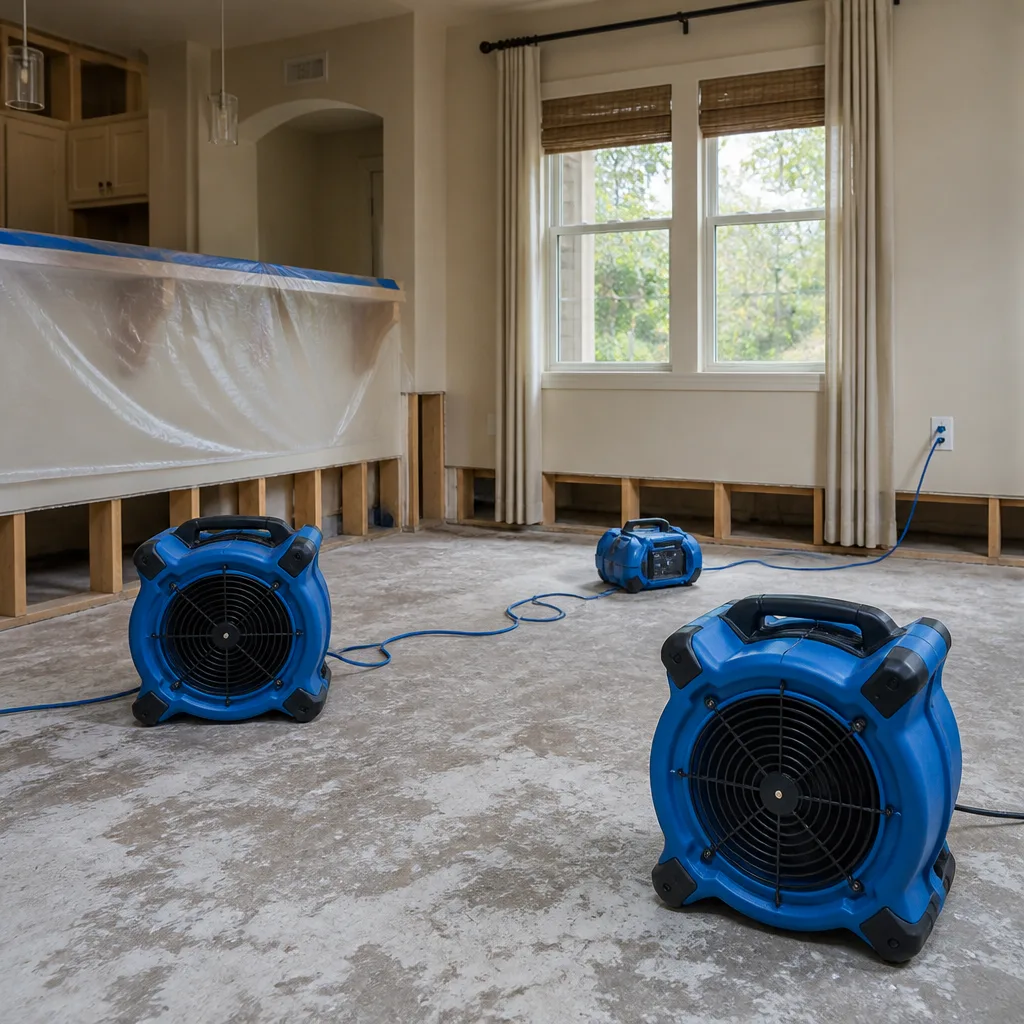
- Running box fans on a wet floor instead of calling a professional. Box fans move air across the surface but do nothing to extract moisture from the subfloor or wall cavities. Professional drying uses equipment like the Injectidry systems and Dri-Eaz dehumidifiers that pull water from inside the structure. A box fan just dries the surface and gives you a false sense of progress.
- Waiting to see if the smell “goes away.” Musty smells in an Orange County home may fade during dry summer months, but they return with winter humidity. The smell fading is not the problem resolving; it’s the problem hiding.
- Calling a handyman instead of a certified restoration company. A handyman can patch a wall, but cannot moisture-map the cavity, cannot dry the structure to IICRC standard, and cannot verify that the mold colony is gone. You’ll pay for the patch and still have the problem.
- Relying on a home inspector’s moisture meter from a home purchase. Home inspection meters are often entry-level tools that only read surface moisture. A professional restoration assessment uses deeper-penetration meters and thermal imaging. A clean home inspection report does not rule out a hidden moisture problem.
See the difference
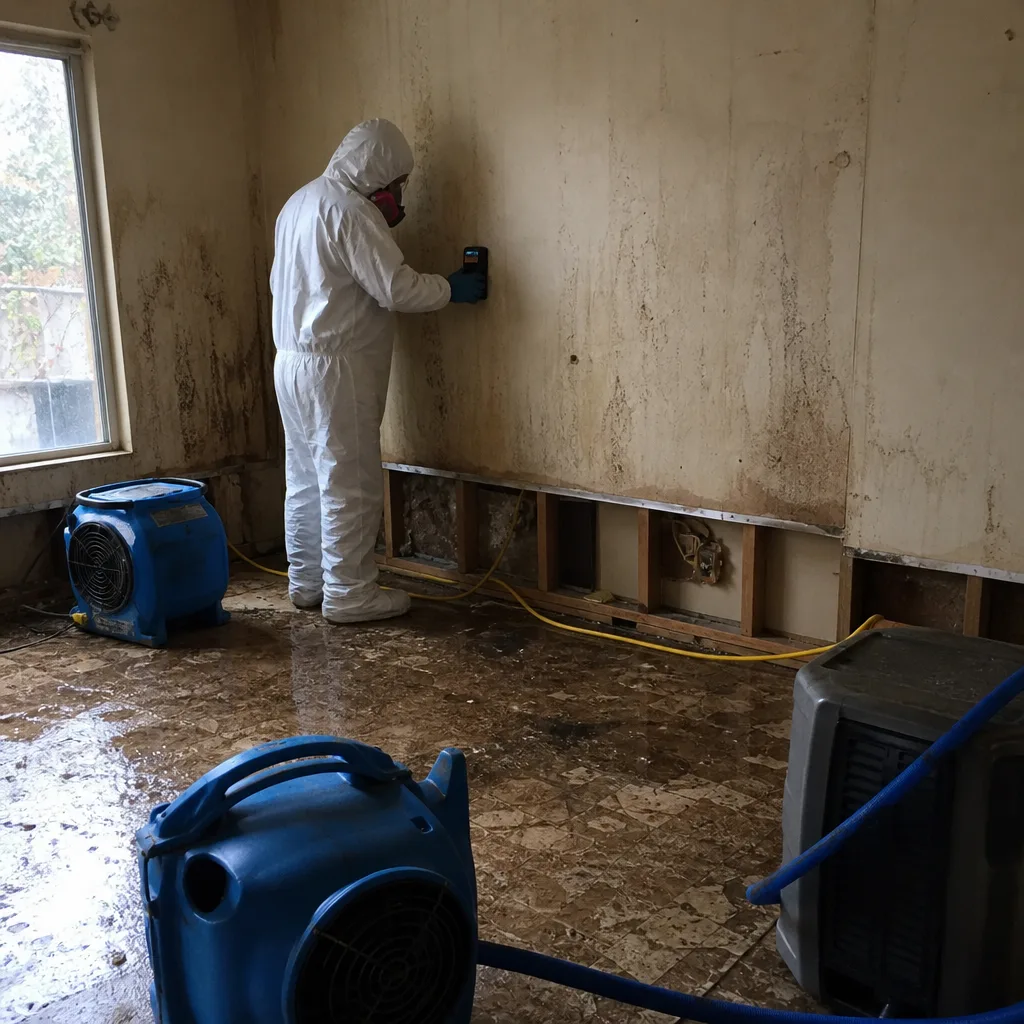 Before
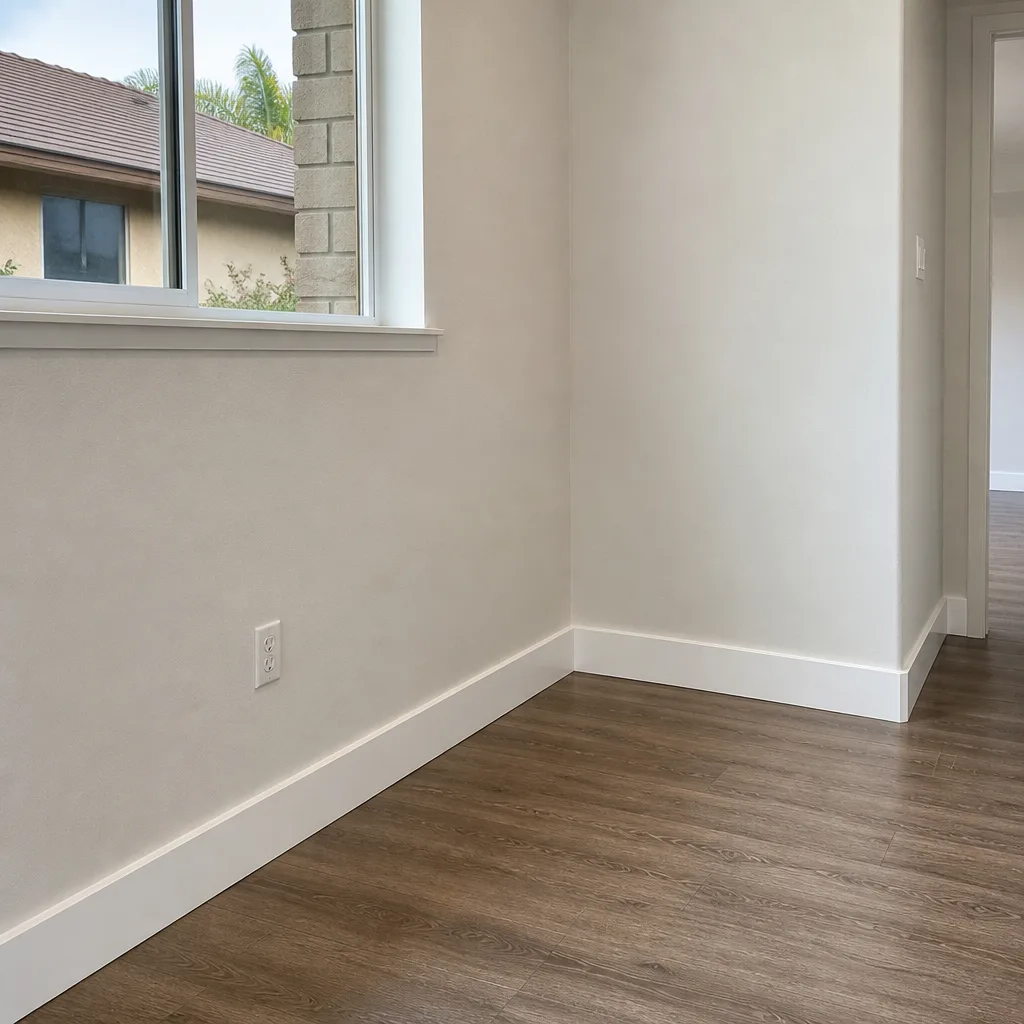 After
After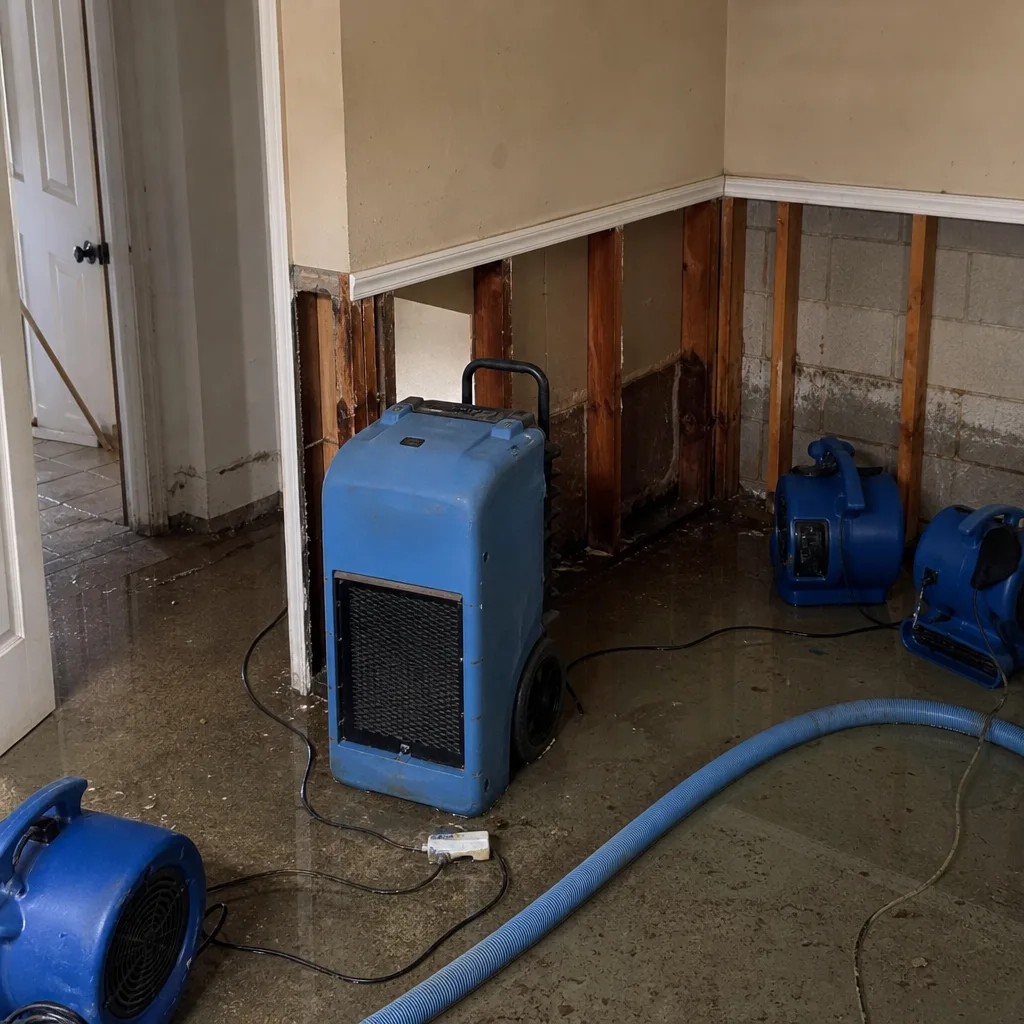 Before
 After
After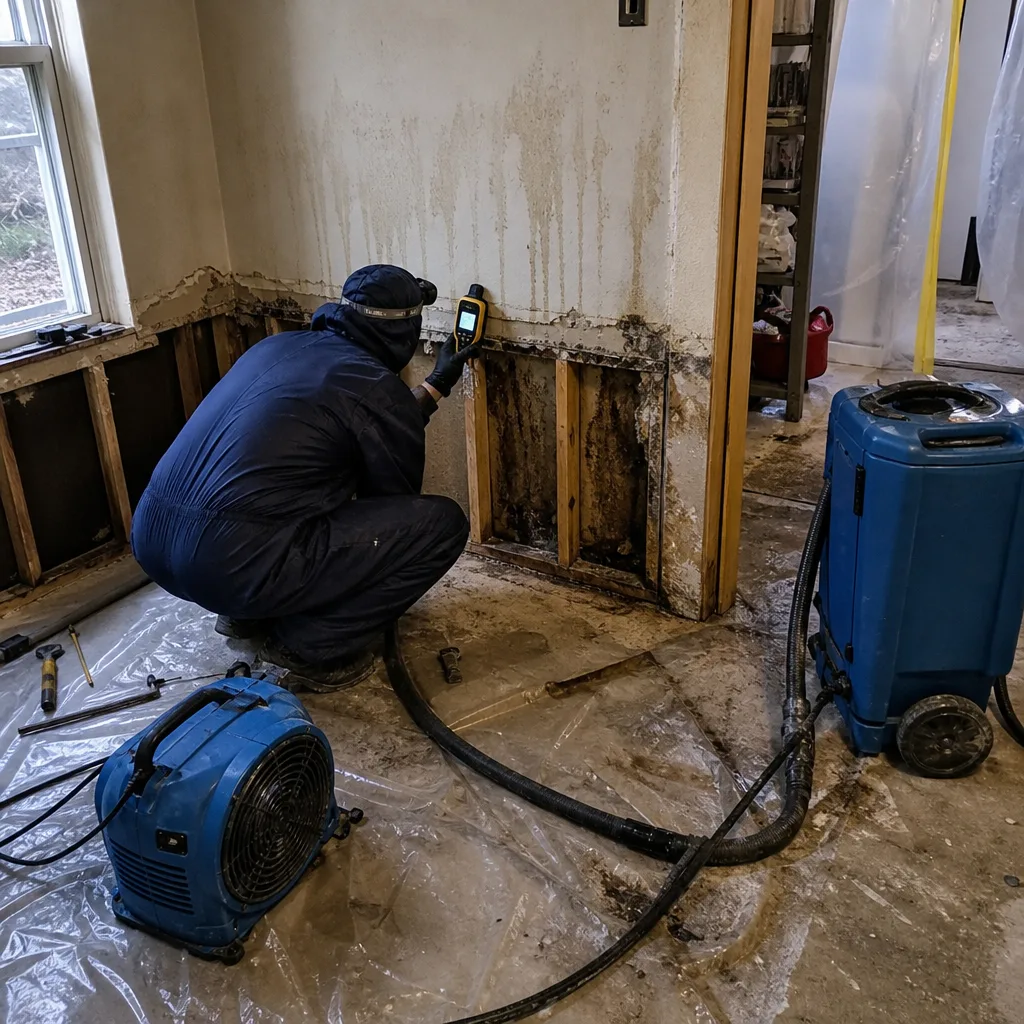 Before
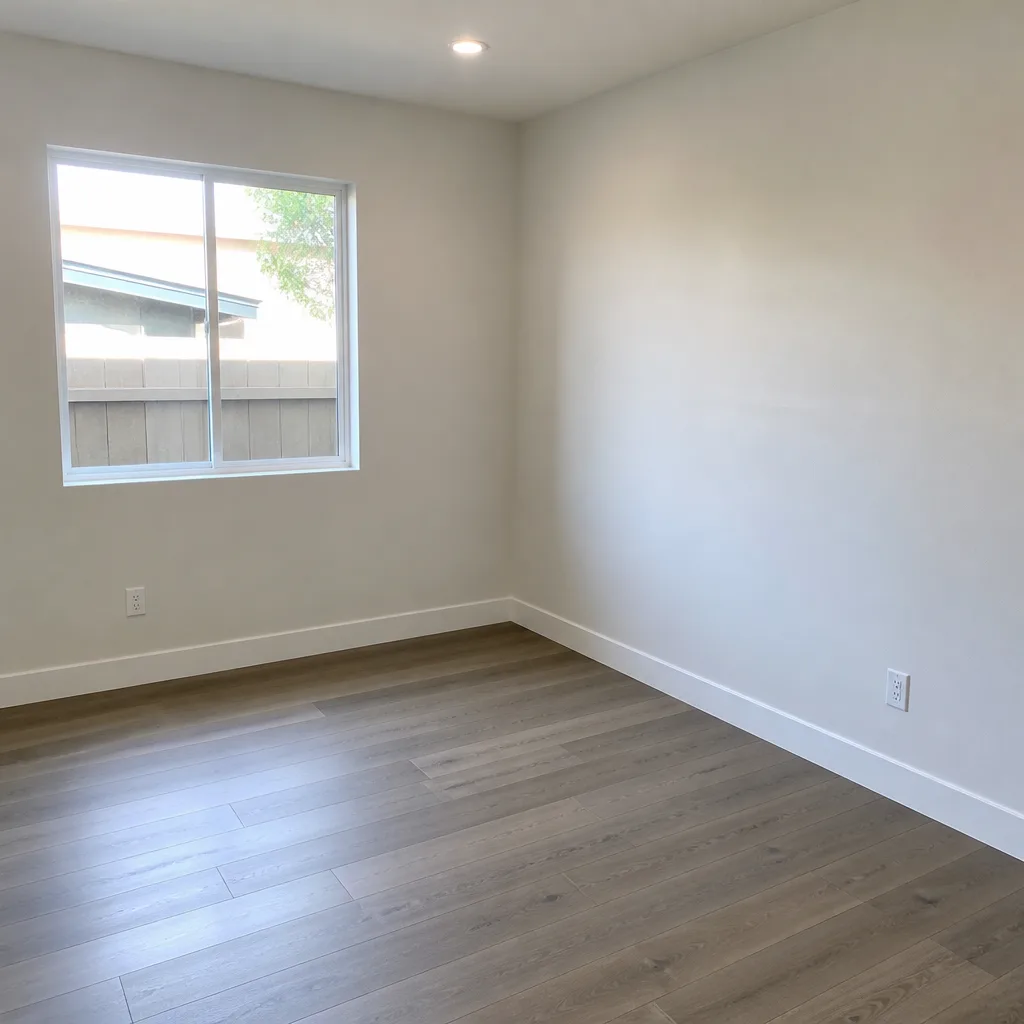 After
AfterWhen to Call a Professional
Call a professional when you see any of the following: a stain that changes size or shape, a cupped or spongy floor area, efflorescence that re-appears after cleaning, a musty or sour smell you can’t locate, a water bill spike without an obvious cause, or any of the signals from the checklist above that point to an active leak. A free moisture mapping visit gives you a definitive answer about whether the moisture is active, and it costs nothing to find out. Wendell Restoration Orange County offers free estimates in Orange County, and our technicians arrive with a live arrival time you can track, background-checked and uniformed. Call (350) 207-2599 to schedule a moisture assessment or get a straight answer about what you’re seeing.
Frequently Asked Questions
An active water stain has feathered, fading edges, paint that is flaking or bubbling, or a dull sound when tapped with a knuckle compared to a sharp sound from surrounding drywall. An old cosmetic stain has crisp edges, stable paint, and a hollow, sharp tap sound like the surrounding wall.
Efflorescence means water has moved through the stucco at some point. The key test is whether it reappears after cleaning. If it does, water is actively moving through the wall right now, usually from a crack, a failed window seal, or a deck flashing leak, and it needs professional assessment.
Yes. A stale, old-book smell that stays the same on humid and dry days often indicates past moisture that dried out. But if the smell gets stronger on humid days, returns after rain, or is strongest when the AC runs, active moisture is still present somewhere and a moisture reading is the only way to confirm.
Mold colonization typically begins within 48 to 72 hours of water exposure on porous materials like drywall and wood. In Orange County’s climate, where homes are sealed with AC running, the smell may not become noticeable for several days, but the mold is already established by then.
A legitimate moisture mapping should be free, with no obligation and no pressure. At Wendell Restoration Orange County, the mapping is free, and the reading numbers are written down and explained to you before any work is discussed. If a company won’t give you the numbers or starts pushing remediation before showing you the reading, walk away.
A slab leak often shows up first as a water bill spike, a warm spot on the floor, a hollow-sounding tile, or cupped wood flooring near an exterior wall. If you see any combination of these, call for a professional assessment. The longer a slab leak runs, the more it undermines the slab and spreads into walls and flooring. Call (350) 207-2599 for a free estimate on assessing the damage.
The Bottom Line
The warning signs that matter in an Orange County home are the quiet ones: a feathering stain edge, a hollow tile, a plank that curls at one end, a white deposit on stucco that won’t stay gone. These signals show up weeks before the musty smell, and they’re easy to check once you know what to look for. If you see any of them, a free moisture mapping gives you a definitive answer in minutes. The worst move is waiting to see if it gets worse, because in water damage, it always does, and the repair bill grows with every day you wait. Written by Blake Sorensen, Owner at Wendell Restoration Orange County, serving Orange County since 2006.
Written by Blake Sorensen, Owner at Wendell Restoration Orange County, serving Orange County since 2006.